Retail supply chains are designed to move products to customers efficiently, but the work does not end at delivery. Returns, delivery refusals, recalls, repairs, and excess inventory create a second flow that can affect labor, transportation, inventory velocity, and recovered revenue.
Reverse logistics vs forward logistics comes down to direction, predictability, and purpose: forward logistics moves products from suppliers to customers through warehousing and fulfillment. While reverse logistics moves products back for inspection, disposition, recovery, resale, or recycling.
The distinction matters at enterprise scale. The annual U.S. returns market is valued at $850 billion, and e-commerce return rates can reach 16% to 24% of online sales, compared with 8.7% for in-store purchases. A clear comparison helps retailers and brands identify where standard distribution processes stop working and where specialized reverse capabilities are needed. For broader context, see the Complete Guide to Reverse Logistics for Retailers and Brands. The comparison starts with the forward flow that most supply chains are built to manage.
Forward Logistics: The Standard Supply Chain Direction
Forward logistics is the planned movement of goods from a manufacturer or supplier to the end consumer. It begins with raw materials and production, then continues through warehousing, inventory management, order fulfillment, transportation, and last-mile delivery. The objective is consistent throughput: getting the right products to the right locations at the right time.
Unlike the variable flows discussed in The Complete Guide to Reverse Logistics for Retailers and Brands, forward operations can be designed around expected demand and repeatable workflows. Forecasts inform purchasing and inventory placement. Standardized shipping methods support large-volume distribution, while optimized transportation and warehouse processes help control delivery time and cost.
Planning inventory for predictable demand
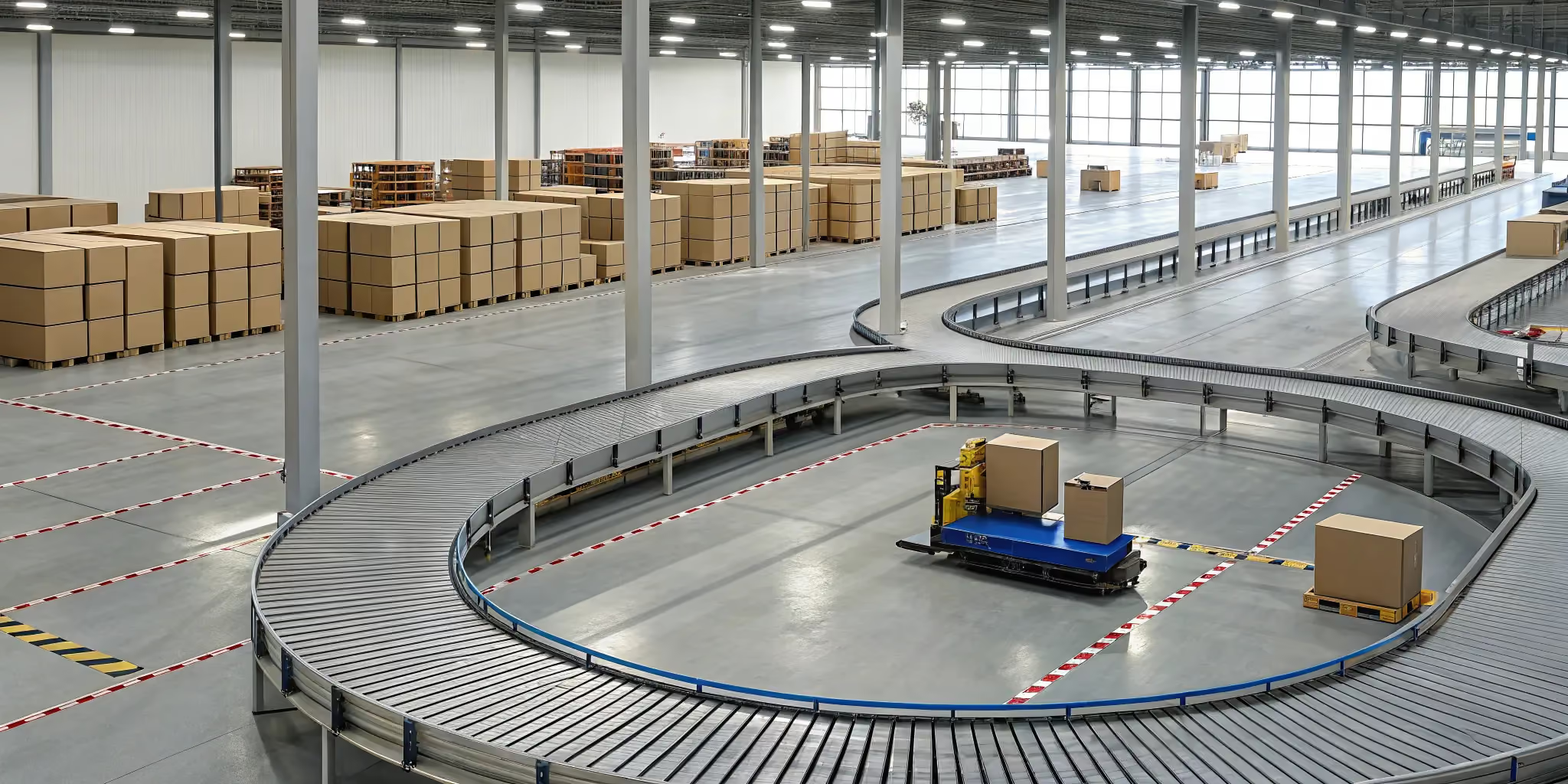
Effective forward logistics depends on predictive inventory management and, increasingly, warehouse automation. Teams use demand plans to determine how much stock to hold, where to position it, and how to replenish it before orders accelerate. Peak-volume planning is especially important during promotions, seasonal events, and other periods when a normal fulfillment model can become a bottleneck. Capacity, labor, carrier commitments, and storage space must be aligned before volume arrives.
Turning warehouse activity into reliable delivery
Warehouse kitting is one practical forward-logistics process. By grouping components or assembling product bundles before an order is released, teams can reduce repetitive handling and improve fulfillment productivity. From there, standardized pick, pack, and ship workflows move orders into the transportation network with fewer avoidable delays.
Reliability matters beyond operational efficiency. Customers form expectations from every delivery promise, and consistent fulfillment helps build trust in the brand. A forward supply chain that plans for demand, uses disciplined warehouse execution, and optimizes transportation gives retailers a dependable foundation. The challenge in reverse logistics vs forward logistics is recognizing that this predictable, delivery-centered model does not automatically solve what happens when products move back.
Reverse Logistics: What Flows the Other Way
Forward logistics moves products from a manufacturer or supplier to the end customer. Reverse logistics moves products in the opposite direction, from the consumer back to the seller or original source. That flow begins when a customer returns an item, a delivery fails or is refused, a product is recalled, or leased equipment reaches the end of its term. It can also include warranty repairs and excess inventory recovery. For a fuller definition, see understanding reverse logistics.
A high-volume operational challenge
Reverse logistics is not a small exception to the primary supply chain. The annual value of goods returned in the United States is approximately $850 billion, representing 13% to 16% of retail sales. E-commerce return rates reach 16% to 24% of online sales, compared with 8.7% for in-store purchases. Those volumes create a continuous operational burden for retailers and brands, especially when return shipments arrive from dispersed locations and demand varies by season, product, and customer behavior. The Complete Guide to Reverse Logistics for Retailers and Brands provides broader context on managing that complexity.
Why a returned product needs more than a new shipping label
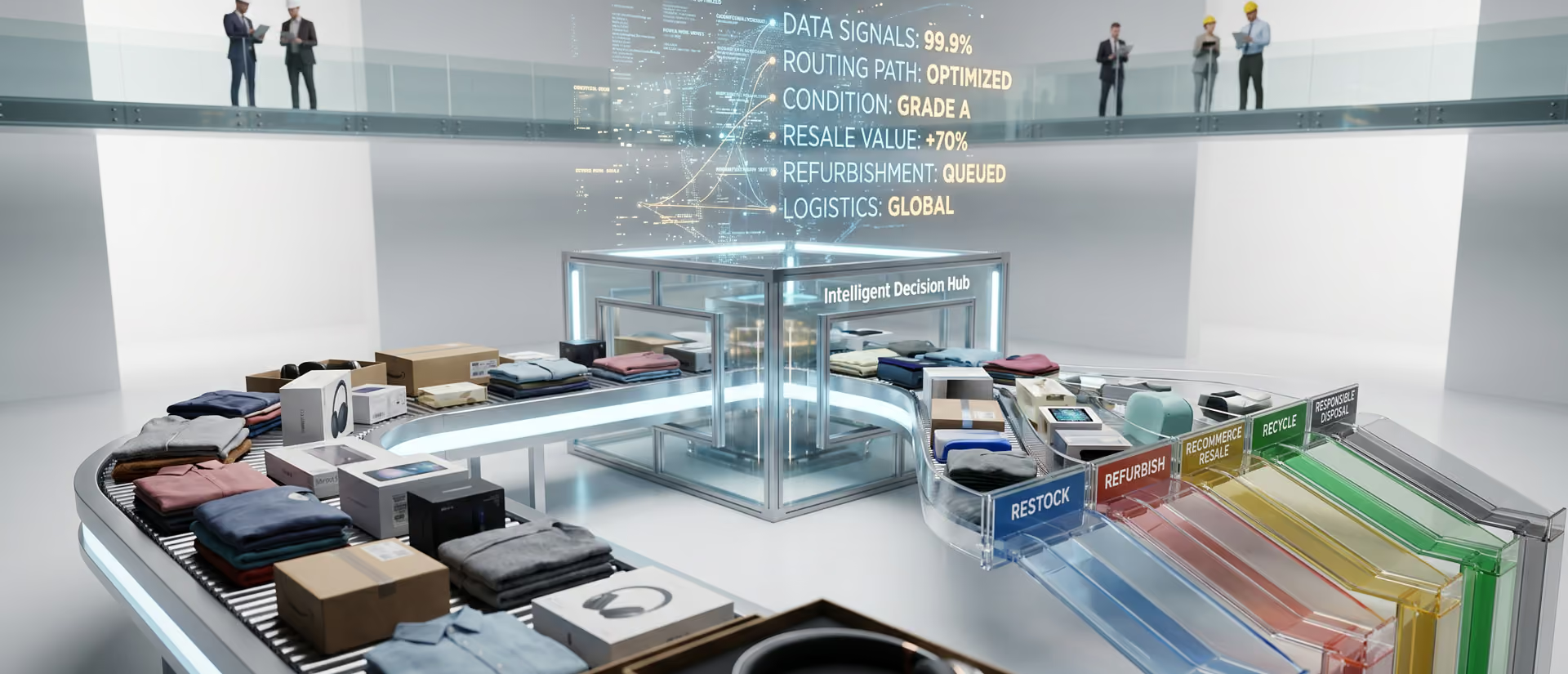
Reverse logistics is fundamentally different from a forward distribution flow. Forward operations prioritize throughput and rapid delivery. A return requires a decision about what happens next. Teams may need to receive the item, inspect it, evaluate its condition, assign a grade, and route it for restocking, refurbishment, resale, recycling, or another recovery path. That multi-stage disposition process makes each unit more variable than a standard outbound order. Product condition, missing components, packaging, warranty status, and market demand can all change the most valuable next step.
ReturnPro was founded in 2008 as the industry's first end-to-end returns solution. Today, it processes more than 45 million units across 1.5 million square feet of warehouse space and reports a 98% refurbishment and recycling rate. These capabilities connect software with physical operations so returned inventory can be evaluated and directed toward the appropriate recovery outcome. Rather than accumulating in a warehouse without a clear disposition.
Understanding this distinction is essential when comparing reverse logistics vs forward logistics. The reverse flow does not simply retrace the outbound route. It must absorb uncertainty, make condition-based decisions, and recover as much value as possible from every returned unit.
Five Key Differences Between Forward and Reverse Logistics
Forward logistics is designed to move new products to customers efficiently. Reverse logistics must recover products after the sale, often through a less predictable chain of inspection, grading, and disposition. These differences affect cost, staffing, inventory decisions, and the systems required to manage each flow.
| Difference | Forward logistics | Reverse logistics |
|---|---|---|
| 1. Cost structure | Costs are comparatively predictable and often tied to units shipped, distance, handling, and delivery. | Costs vary with the product's condition, transportation needs, inspection requirements, and final disposition path. |
| 2. Routing | The typical route is linear: manufacturer or supplier, warehouse, fulfillment, and consumer. | Returned goods move from the consumer through consolidation, inspection, grading, refurbishment, and disposition. Returns often begin at dispersed locations before moving to a central hub. |
| 3. Predictability | Demand forecasts, planned inventory, and standardized workflows support capacity and shipment planning. | Return volumes and arrival timing are harder to predict, and product conditions vary. Reverse flows therefore require more agility than forward flows, as documented by academic research on reverse logistics. |
| 4. Product condition | Products are generally new or manufactured goods prepared for sale and delivery. | Products may be unopened, used, damaged, defective, or open-box. Each item may need evaluation before it can be restocked or recovered. |
| 5. Disposition complexity | The primary operational endpoint is successful delivery to the customer. | The item may return to inventory, be refurbished, sold at a discount, recycled, or destroyed. Disposition decisions determine how much value the business recovers, consistent with research on reverse logistics disposition. |
The operational impact is substantial. Sifted reports that optimized reverse logistics can reduce returns processing costs by up to 25%. Although results depend on the quality of the operating model and the items being processed. ReturnPro's integrated approach reduces processing time from more than 60 days to 18 days, giving teams faster visibility into inventory, recovery value, and customer outcomes.
Understanding the differences is the first step. The next is designing a consistent reverse logistics process that connects return authorization, transportation, evaluation, and disposition decisions.
Why Retailers Under-Invest in Reverse Logistics Infrastructure
Retailers rarely neglect reverse logistics because returns are unimportant. They under-invest because traditional supply chain planning makes forward movement easier to see, measure, and fund. Forward logistics puts products in front of customers, supports revenue at the point of sale. And has familiar operating metrics such as units shipped, delivery speed, and order accuracy. Investments in fulfillment centers, transportation, and inventory systems therefore appear directly connected to growth.
Reverse operations are treated as a cost center
Returns arrive after the sale and are often recorded as refunds, labor, transportation, or write-offs. That accounting view can hide the value available through inspection, grading, repair, resale, exchange, and recycling. In practice, reverse logistics is a recovery process, not simply a return shipment. The annual value of goods returned in the United States is approximately $850 billion, so even small improvements in disposition and recovery can materially affect margin. Supply chain services can help connect those physical decisions to a consistent operating model.
Shared facilities do not mean shared capabilities
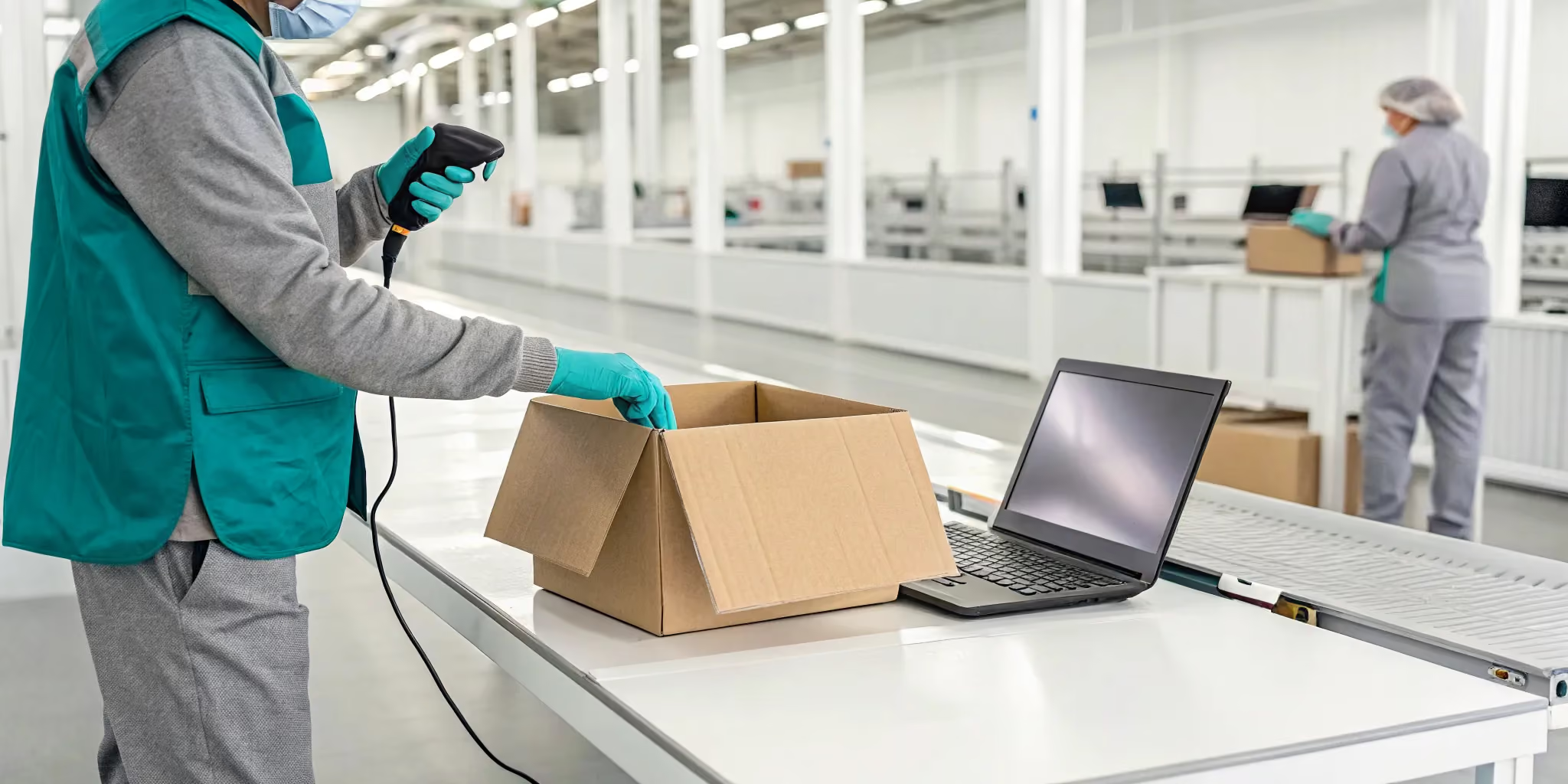
Forward and reverse flows may use the same warehouses, carriers, and inventory systems, but they do not require the same work. Forward fulfillment is designed to pick, pack, and ship known products in standardized condition. Reverse operations must identify what came back, inspect its condition, grade it, determine the best disposition, and route it accordingly. Depending on the product, that may also require refurbishment, data wiping, repackaging, or specialized recycling.
When those capabilities are missing, returned goods wait in receiving areas or move through generic workflows that were never designed for variable conditions. The result can be processing cycles of 60 days or more, while recovery value declines with time, seasonality, and product obsolescence. Customers experience the same under-investment through slower refunds, unclear status updates, and inconsistent policies.
The customer impact makes the business case
Returns influence the purchase decision before an order is placed. More than 80% of shoppers check a retailer's return policy before buying, and 95% say they will purchase again after a positive return experience. These figures make reverse logistics part of the customer experience, not an isolated warehouse function. A retailer that treats returns as a managed investment can protect loyalty while recovering more value from each unit. A retailer that treats them as an unavoidable cost risks losing both the returned product's value and the next sale.
How to Build a Supply Chain That Handles Both Directions
Building for both forward and reverse logistics means treating the return flow as part of the supply chain, not as an exception after fulfillment. An integrated model connects the software that manages return initiation and decisioning with the physical network that receives, inspects, routes, and recovers inventory. This gives operations teams one view of movement, condition, disposition, and value across both directions.
ReturnPro applies this approach through a three-pillar model:
- Returns SaaS Platform: Manages return initiation, policy rules, routing, and decisioning so each item can move toward the best operational outcome.
- Supply Chain Services: Provides the physical processing capabilities needed for receiving, inspection, grading, consolidation, and disposition. Explore ReturnPro supply chain services for the operational layer behind the model.
- ReCommerce: Recovers value through resale and other channels instead of allowing returned inventory to become stranded or prematurely written off. See the ReCommerce services solution for more detail.
Close the B2B returns gap
Consumer returns are only part of the challenge. An estimated 35.1% of returns go back to vendors, representing a B2B segment worth more than $240 billion. Treating vendor returns as a separate administrative process can hide transportation costs, delay credits, and reduce visibility into inventory that could be repaired, resold, or redeployed.
Make data visibility operational
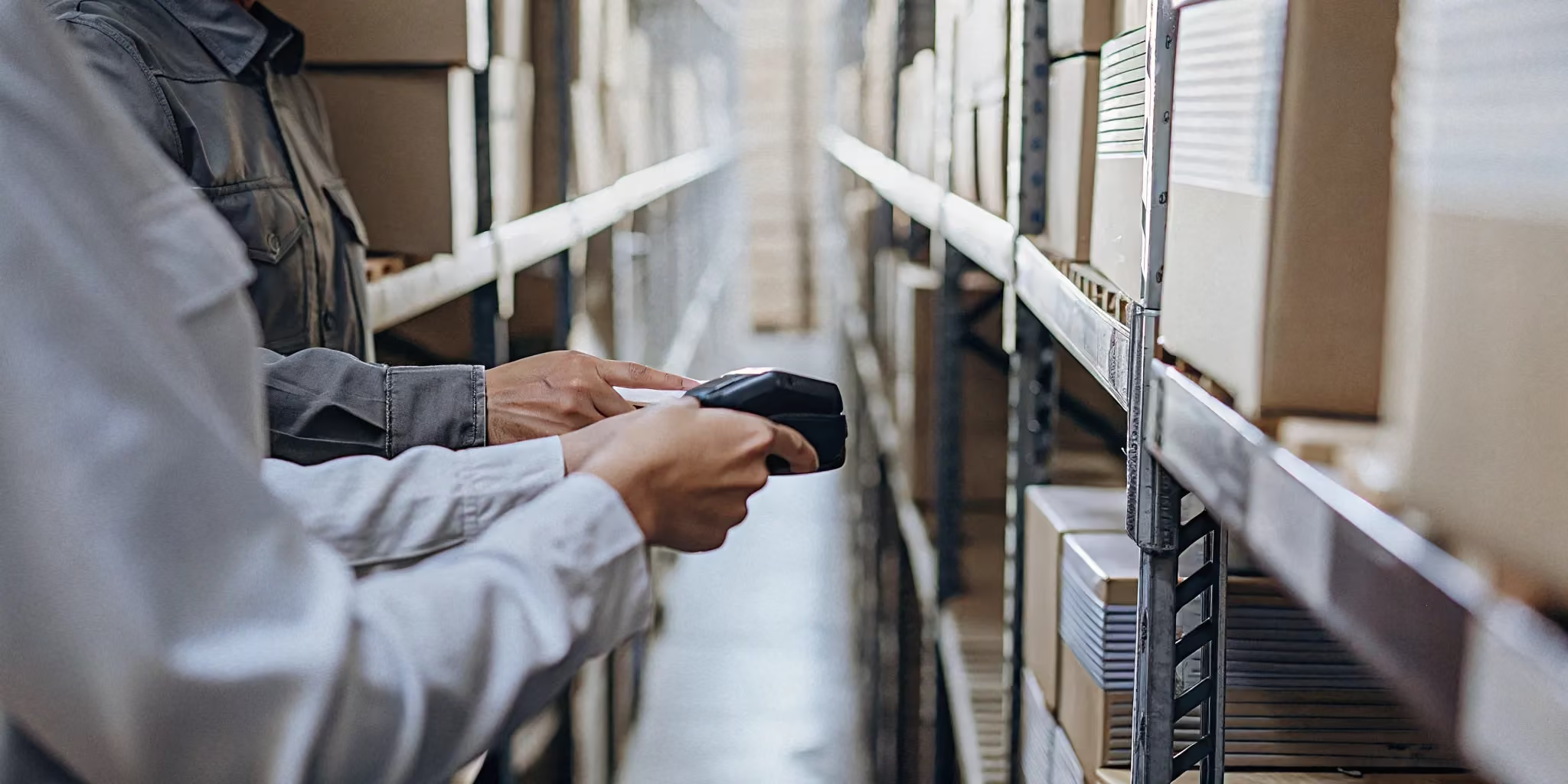
Shared data across both flows is essential. Teams should be able to connect the original sale, return reason, item condition, processing location, disposition decision, and recovered value. Research on integrated forward-reverse logistics systems identifies end-to-end visibility as essential to supply chain transparency. Integrated design can also minimize total network cost by maximizing asset utilization (research on integrated logistics network design; integrated forward-reverse logistics research).
The business case is measurable when the systems and operations work together. ReturnPro delivers 75% faster processing, 60% overhead reduction, and more than $5 billion in lifetime recovery for clients. Integration improves inventory velocity, reduces duplicated handling, and helps each asset reach its highest practical value instead of adding cost at every handoff.
Frequently Asked Questions
What is the main difference between reverse logistics and forward logistics?
Forward logistics moves raw materials and finished products from suppliers through warehouses and fulfillment operations to customers. Reverse logistics manages the opposite flow, moving products from customers back to a seller or original source for inspection, repair, resale, recycling, or another disposition. Academic guidance on reverse logistics distinguishes the two by their direction and operating purpose.
Why is reverse logistics more complex than forward logistics?
Forward operations usually plan around known products, destinations, and service levels. Returns arrive at less predictable times and may be new, opened, damaged, defective, or incomplete. Each item may need a different inspection and disposition path, so processing requires more judgment than standard outbound fulfillment. The reverse flow may also consolidate products from many customer locations into a central facility.
When does a reverse logistics process begin?
It can begin with a customer return, delivery failure, refused delivery, product recall, warranty repair, seasonal inventory restock, or the end of a lease or rental term. The trigger determines the required authorization, transportation, inspection, and final disposition steps. A clear intake process helps prevent returned goods from sitting untracked in transit or storage.
How do reverse logistics operations recover value from returned products?
After inspection and grading, a business can return an item to inventory, refurbish it, resell it at a discount, use it for parts, or recycle it. The best route depends on condition, demand, transportation cost, data-security requirements, and expected recovery value. These disposition choices help convert returns from an unmanaged expense into a controlled recovery process.
How can businesses optimize both logistics flows?
Start by connecting order, inventory, transportation, and returns data so teams can see product movement end to end. Standardized return policies, defined disposition rules, consolidated transportation, and shared network planning can improve consistency. Research on integrated logistics design also emphasizes combining forward and reverse models to support resilience, sustainability, and responsiveness: see the research overview.
Ready to Improve Your Returns Operation?
Reverse logistics becomes easier to manage when retailers have a clear view of each return's condition, routing, and next step. Schedule a demo to see how ReturnPro can help bring greater structure and control to your returns operation. Schedule a demo with the ReturnPro team to discuss your goals and identify a practical path forward.