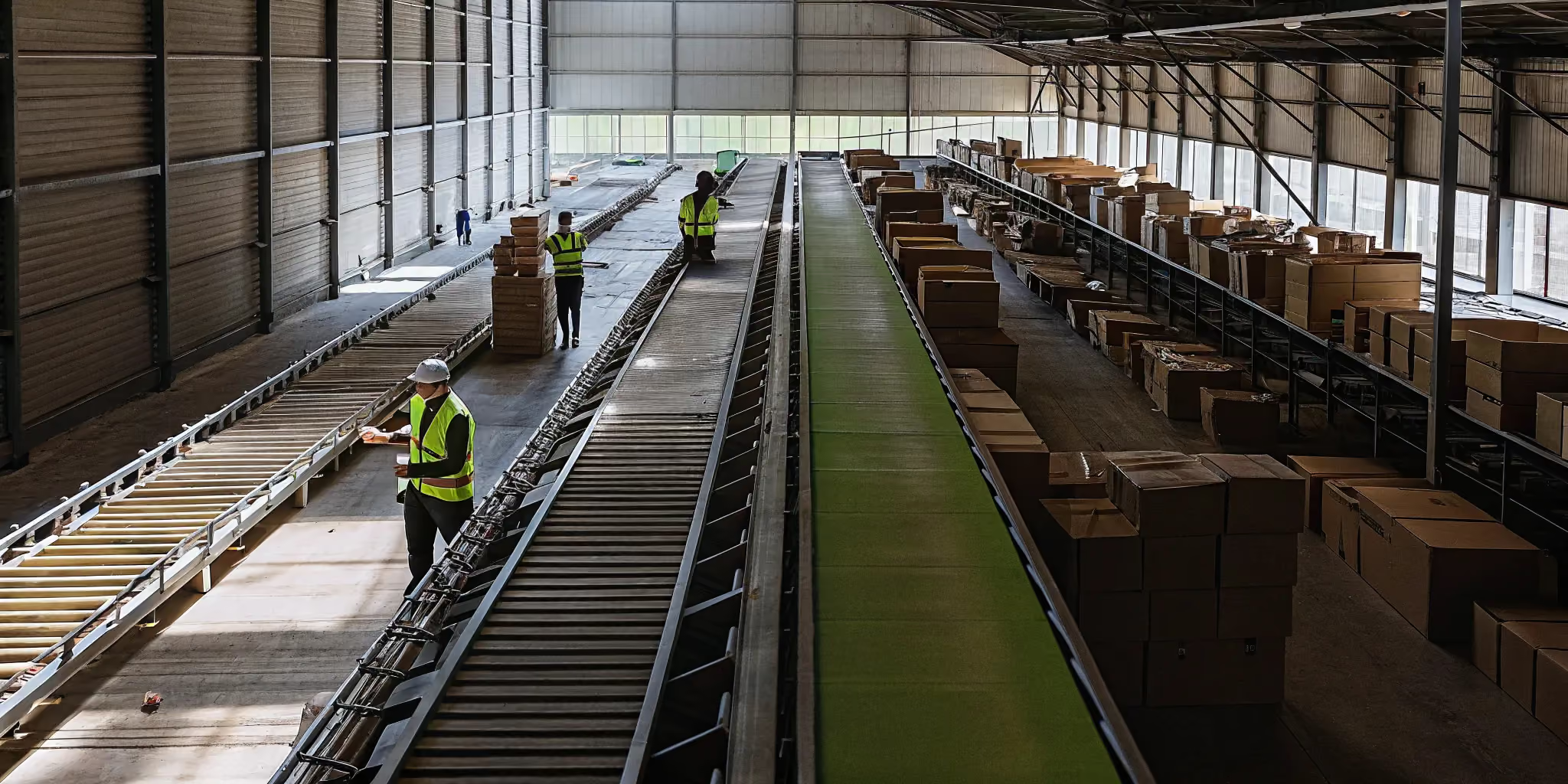
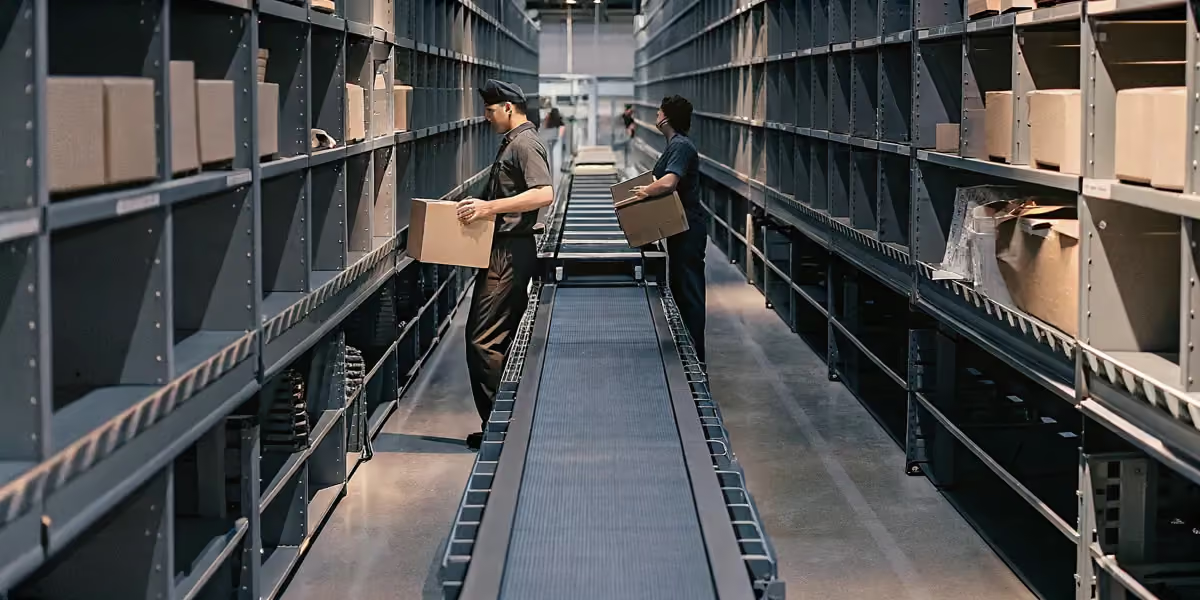
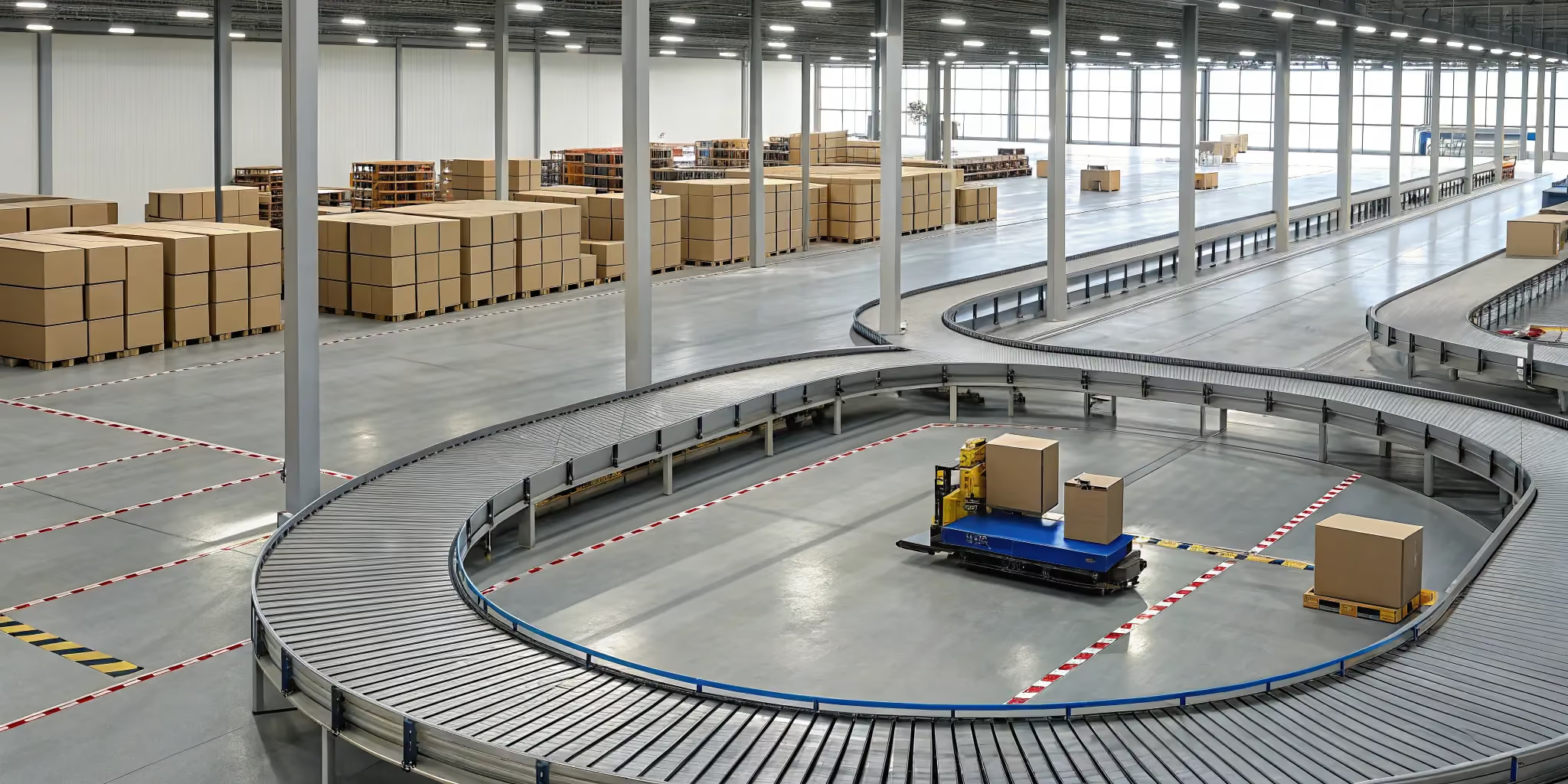
A customer’s final interaction with your brand is often not the purchase, but the return. A clunky, slow, or confusing returns process can sour a great shopping experience and ensure a customer never comes back. In contrast, a fast, easy, and transparent return can build incredible trust and loyalty, turning a potentially negative situation into a brand-defining moment. Delivering this consistently excellent experience is a major challenge when you’re managing returns in-house. It requires dedicated staff, technology, and focus. This is where partnering with a specialist for 3pl returns processing becomes a powerful tool for customer retention, transforming your post-purchase experience into a competitive advantage.
Key Takeaways
- In-house returns have hidden costs: Managing returns internally consumes significant labor and warehouse space, creating inventory inaccuracies that disrupt your operations and pull focus from growth-oriented activities.
- A fast, easy return builds customer loyalty: Outsourcing can cut processing time by 50% or more, leading to quicker refunds that turn a potentially negative experience into a reason for customers to shop with you again.
- Choose a partner with an integrated solution: The right partner combines technology (SaaS), expert logistics, and recommerce capabilities to not only handle returns efficiently but also recover revenue and provide data to improve your business.
What Is 3PL Returns Processing?
When you partner with a third-party logistics (3PL) provider for returns, you’re handing over the entire reverse logistics process to a team of experts. Instead of your team managing every returned package, a 3PL handles everything from the moment a customer initiates a return to the final disposition of that item. This frees up your time and resources, allowing you to focus on growing your business while a specialist handles the complexities of the post-purchase experience. Let’s walk through how it works.
How the Returns Processing Cycle Works
The returns processing cycle covers all the steps involved in managing products that customers send back. The main goal is to efficiently determine the best path forward for each item, a decision known as its "disposition." A 3PL partner receives the returned goods at their warehouse and quickly works to figure out what's next. Can it be resold as new? Does it need minor repairs? Or is it best suited for recycling or liquidation? Expert Supply Chain Services ensure this process is fast and effective, helping you recover as much value as possible from every return.
Issuing and Tracking RMAs
A Return Merchandise Authorization (RMA) is a unique number assigned to a product that a customer is sending back. Think of it as a tracking number specifically for returns. This number is essential for keeping tabs on the item as it travels from the customer back to the warehouse. It also captures important information, like the reason for the return. A modern returns management system automates the creation of RMAs, giving both you and your customer full visibility into the return’s status and providing valuable data to help you identify potential product issues or trends.
Inspecting, Grading, and Routing Returned Products
Once a returned item arrives at the 3PL’s facility, it undergoes a detailed inspection. Trained staff carefully check the product for any signs of use, wear, or damage. Based on this assessment, the item is graded according to its condition, such as "like new," "gently used," or "damaged." This grade determines where the product is routed next. An item in perfect condition might go straight back into your primary inventory. Others might be sent for refurbishment or directed to a recommerce channel to be sold on a secondary marketplace, ensuring you don’t miss out on potential revenue.
3PL vs. In-House Returns: What's the Difference?
Handling returns in-house often means a slow, manual process that can take 10 to 15 days or more. This typically involves a lot of back-and-forth emails, delays in sending return labels, and packages piling up in your warehouse, leading to slow refunds and frustrated customers. In contrast, partnering with a 3PL can shorten the entire cycle to just two to four days. A 3PL provides an automated portal where customers can initiate returns and get shipping labels instantly. This streamlined solution not only saves you money but also keeps your customers happy and gets products back on your shelves faster.
The Hidden Costs of Managing Returns In-House
At first glance, handling returns yourself seems like the simplest and most cost-effective path. You already have the warehouse and the team, so why add another partner to the mix? But as your business grows, the true cost of managing returns in-house starts to reveal itself in ways that don’t always show up on a balance sheet. These hidden costs can quietly drain your resources, disrupt your operations, and chip away at your profit margins without you even realizing it until it's a major problem.
The reality is that reverse logistics is a completely different beast than forward logistics. It’s not as simple as putting an item back on the shelf. Each return requires careful inspection, decision-making, and processing, all of which consume significant time and manpower. Before you know it, you have a corner of your warehouse piled high with returned goods, a team stretched thin between fulfilling new orders and managing old ones, and inventory numbers that just don’t add up. This operational drag doesn't just affect your bottom line; it can also impact team morale and your ability to focus on growth. Understanding these subtle but significant costs is the first step toward building a more efficient, profitable, and scalable returns process.
How In-House Returns Strain Your Resources
If it feels like your team is constantly scrambling to keep up with returns, you’re not imagining it. Processing a return can demand two to three times more labor and warehouse space than shipping a new order. Think about what that means for your daily operations. Your staff has to stop picking and packing new sales to inspect returned items, grade their condition, and figure out where they go next. This constant context-switching creates major inefficiencies and can slow your entire fulfillment process to a crawl. That valuable warehouse space gets clogged with returned products, leaving less room for your sellable inventory. Our Supply Chain Services are designed to take this burden off your team.
The Impact of Returns on Inventory Accuracy
A messy returns process creates chaos for your inventory management. When returned items sit in a pile waiting to be inspected, they exist in a state of limbo. They aren’t available for sale, but they haven’t been written off either. This creates discrepancies that disrupt your inventory accuracy and make financial reporting a nightmare. Without a clear, real-time view of your returned stock, you can’t make smart purchasing decisions. This uncertainty often leads to lost sales from out-of-stock items or wasted capital tied up in products you don’t actually need. A dedicated Returns SaaS platform gives you the visibility to prevent this.
Debunking Myths About Outsourcing Returns
Many brands hesitate to outsource returns because of a few persistent myths. The first is that 3PLs are only for enterprise-level companies. The truth is, many providers offer flexible solutions that scale with you. Another common fear is losing control over your brand experience. However, a good partner acts as an extension of your team, giving you more visibility and control through advanced software than you’d have with a manual in-house system. Finally, there’s the myth that it’s just too expensive. When you add up the hidden costs of labor, space, and lost product value, you’ll often find that outsourcing is the more financially sound decision. We explain why ReturnPro is a trusted partner for brands of all sizes.
Key Advantages of Outsourcing Your Returns
Handing over your returns process to a third-party logistics (3PL) partner might feel like a big step, but it’s one of the most strategic moves you can make for your business. Managing returns in-house is a constant drain on time, money, and staff, pulling focus from core activities like product development and marketing. When you outsource, you’re not just offloading a task; you’re gaining a team of experts dedicated to making your post-purchase experience as seamless as your sales process. This shift allows you to stop treating returns as an unavoidable cost and start seeing them as an opportunity to build loyalty and recover value.
A specialized partner transforms returns from a logistical headache into a source of competitive advantage. They bring efficiency, technology, and expertise that most brands can't justify building on their own. This partnership allows you to process returns faster, which leads to quicker refunds and happier customers who are more likely to shop with you again. It also helps you get a handle on the unpredictable operational costs associated with reverse logistics. Beyond the immediate benefits, the right partner can help you scale effortlessly during busy seasons and even tap into new revenue streams through recommerce. By leveraging comprehensive returns solutions, you can strengthen customer loyalty and improve your bottom line.
Process Returns Faster and Issue Quicker Refunds
One of the most immediate benefits of working with a 3PL is speed. A dedicated partner can slash the time it takes to process a customer return by 50% or more. Instead of returned packages piling up in a corner of your warehouse waiting for someone to get to them, a 3PL processes them as soon as they arrive. This efficiency means items are inspected, sorted, and put back into inventory or routed for resale much faster. For the customer, this translates into getting their refund or exchange in days, not weeks, creating a positive experience that encourages them to shop with you again. This streamlined workflow is a core part of effective supply chain services.
Reduce Your Operational Costs
Returns are expensive. In the US alone, online retailers spend around $100 billion annually on reverse logistics. These costs include everything from shipping and labor to warehouse space and the depreciation of returned goods. When you manage returns in-house, these expenses can be unpredictable and difficult to control. Outsourcing to a 3PL converts these variable overheads into a more predictable operational cost. You no longer have to worry about staffing for fluctuating return volumes or dedicating valuable warehouse space to a non-revenue-generating activity. A partner with expertise in 3PL returns processing can optimize every step to keep your costs down.
Improve Customer Satisfaction and Build Loyalty
A fast, easy return process is no longer a nice-to-have; it’s a customer expectation. Think about it: getting your money back in two to four days versus ten to fifteen makes a huge difference in how you feel about a brand. A positive return experience can turn a potentially negative situation into a moment that builds trust and loyalty. When you partner with a 3PL, you’re investing in a consistently excellent customer experience. This reliability shows customers you value their time and business, making them much more likely to become repeat buyers. A great returns process is a powerful, and often overlooked, marketing tool that directly impacts why customers choose you over a competitor.
Scale Your Operations for Peak Seasons
Retail has its seasons, and with peak sales periods come peak return periods. For an in-house team, a post-holiday surge in returns can be completely overwhelming, leading to backlogs, delays, and frustrated customers. A 3PL partner is built to handle these fluctuations. They have the staff, space, and systems to scale their operations up or down as needed, ensuring your returns are always processed efficiently, no matter the volume. This flexibility allows your team to stay focused on sales and growth, knowing the post-purchase experience is in expert hands. Using a sophisticated returns management system is key to managing this scalability without a hitch.
Tap into Sustainability and Recommerce
What happens to your returned items? Tossing them is wasteful and a missed financial opportunity. A forward-thinking 3PL partner does more than just process refunds; they help you build a sustainable and profitable reverse supply chain. Through expert inspection and grading, they can identify which items can be resold, refurbished, or recycled. This opens the door to recommerce, allowing you to capture value from returned inventory that might otherwise be lost. By giving products a second life, you not only create a new revenue stream but also meet the growing consumer demand for sustainable business practices. Specialized ReCommerce Services can turn your returns into a competitive advantage.
What Technology Do 3PLs Use to Streamline Returns?
When you think about returns processing, you might picture a massive warehouse where teams manually unbox and sort items. While that’s part of it, the best third-party logistics (3PL) partners lean heavily on technology to make the entire process faster, smarter, and more efficient. This tech isn't just about moving boxes; it’s about creating a seamless experience for your customers and gathering data that can strengthen your business. A modern returns operation is powered by a sophisticated software stack that handles everything from the moment a customer decides to send something back to its final destination, whether that's back on the shelf or into a new owner's hands.
The right technology transforms returns from a logistical headache into a well-oiled machine. It provides visibility for you and your customer, automates tedious manual tasks, and uncovers valuable insights hidden within your return patterns. At the core of this are three key pieces of technology: a robust returns management system (RMS), a customer-friendly automated portal, and powerful data analytics tools. Together, these systems form the digital backbone of an effective reverse logistics strategy, helping you reduce costs and keep customers happy.
Returns Management Systems (RMS)
Think of a Returns Management System, or RMS, as the central command center for your entire returns process. This specialized, cloud-based software is designed specifically to manage the reverse flow of goods. From the initial return request to inspection, grading, and final routing, the RMS tracks every step. For a 3PL, this system is non-negotiable. It allows them to manage returns for multiple clients within a single platform, ensuring nothing gets lost in the shuffle. A powerful Returns SaaS platform provides a unified view of every return, making it possible to process items quickly and accurately while keeping you in the loop.
Automated Return Portals
A great returns experience often starts with an easy-to-use online portal. Instead of emailing customer service and waiting for instructions, customers can initiate their own returns in minutes. These automated portals guide shoppers through the process, allowing them to select the items they’re returning, state the reason, and receive a shipping label instantly. This self-service approach not only saves your team valuable time but also gives customers the speed and convenience they expect. It’s a simple touch that significantly improves customer satisfaction and reduces the friction that can make or break their loyalty to your brand.
Real-Time Inventory Tracking and Data Insights
Beyond just processing packages, a 3PL’s technology stack is a goldmine of data. As returns are processed through the RMS, the system captures crucial information, from return reasons to product condition. This real-time data helps you understand why customers are returning items, allowing you to address underlying issues with product descriptions, sizing, or quality. This information is also vital for inventory management, giving you an accurate, up-to-the-minute view of what’s coming back. By analyzing these trends, you can make smarter decisions, reduce future returns, and even identify items that can be resold through recommerce channels to recover revenue.
Is Your Returns Process Costing You More Than You Think?
Returns can feel like a necessary evil, but have you ever stopped to calculate what they’re really costing your business? It’s often much more than just the price of the refunded product. When you factor in labor, shipping, processing, and even the environmental impact, the numbers can be staggering. For every $1 billion in sales, the average retailer loses around $165 million to returns. That’s a huge chunk of revenue walking out the door.
These hidden expenses are part of what’s known as reverse logistics, a process that costs US online stores a collective $100 billion each year. The good news is that you don't have to accept these costs as a fixed price of doing business. By understanding where the money is going and how third-party logistics (3PL) partners structure their fees, you can find ways to create a more efficient and cost-effective returns strategy. Let's look at the key financial pieces of the puzzle.
Understanding 3PL Pricing Models
When you partner with a 3PL, their pricing covers the entire post-purchase journey. This includes everything from receiving and inspecting returned items to restocking, reselling, or recycling them. While every provider is different, most 3PL pricing models are built around a few core fees. You might see charges for initial setup, receiving each return, storage per pallet or bin, and order fulfillment if an item is resold. The key is to find a partner who offers transparent, predictable pricing without hidden fees. A clear understanding of these costs helps you budget accurately and evaluate the true return on your investment.
Key Cost Drivers and How to Control Them
With 20% to 30% of all online orders coming back, the two biggest cost drivers in returns are shipping and labor. Processing a single return, which involves inspection, grading, and routing, can cost between $3 and $10. When you multiply that by hundreds or thousands of returns, it adds up quickly. So, how do you get these costs under control? A specialized returns partner can be a game-changer. They often secure better shipping rates due to high volume and can optimize the entire workflow to reduce manual labor. By efficiently sorting items for resale, repair, or recycling, they also help you recover value from returned inventory through recommerce services, turning a cost center into a revenue stream.
How to Measure a 3PL Partner's Performance
Once you’ve handed over your returns process, how do you know if your 3PL partner is doing a good job? Setting clear expectations and tracking performance is key to a successful partnership. Think of it as a regular health check-up for your reverse logistics. While your 3PL handles the day-to-day operations, you need to monitor the results to ensure they’re meeting your standards for efficiency, cost, and customer experience.
The best way to do this is by establishing Key Performance Indicators (KPIs) in your Service Level Agreement (SLA) from the very beginning. This creates a shared understanding of what success looks like and provides a framework for accountability. A great partner will not only agree to these metrics but will also provide you with a dashboard or regular reports to track them. By focusing on the right data, you can work together to refine processes, solve problems, and make sure the partnership is delivering real value for your business and your customers. Here are the essential metrics you should be tracking.
Return Processing Time
How quickly does your 3PL turn a returned package into a resolved case? This is your return processing time. It measures the duration from when a return arrives at the warehouse to when it’s fully processed, meaning it has been inspected, graded, and the customer has been refunded or issued a credit. A slow process leaves customers waiting for their money and keeps valuable inventory sitting idle. An efficient partner can cut the time it takes to process customer returns significantly, often by 50% or more. This speed not only makes customers happier but also gets your products back into stock and ready to be sold again faster.
Return Accuracy Rate
Accuracy in returns processing is just as important as speed. This metric tracks how often your 3PL handles returns correctly. Are they accurately inspecting items and grading their condition? Are they routing products to the right place, whether it's back to stock, to a repair channel, or for liquidation? High accuracy rates are essential for maintaining trust and satisfaction. An error, like restocking a damaged item that gets sent to another customer, can create a new problem and damage your brand’s reputation. Tracking this KPI ensures your partner’s quality control is up to par and protects your inventory value.
Cost Per Return
Understanding the true cost of returns is critical for managing your profitability. The cost per return metric calculates the total expense associated with processing a single returned item. This includes labor for handling and inspection, shipping costs, and any materials used. On average, the cost for handling products that customers send back can range from $3 to $10. An experienced 3PL partner should help you lower this number through efficient workflows, economies of scale, and smart dispositioning. Monitoring this KPI helps you budget effectively and highlights how your partner’s operational efficiency directly impacts your bottom line.
Customer Satisfaction (CSAT)
Your returns process is a critical customer touchpoint, and it can either build loyalty or break it. Customer satisfaction (CSAT) measures how happy your customers are with their return experience. While your 3PL might be managing the logistics behind the scenes, their performance directly affects your customers' perception of your brand. You can measure customer satisfaction through surveys sent after a return is completed. Ask simple questions like, "How easy was it to make your return?" A consistently high CSAT score is a strong indicator that your 3PL partner is providing a seamless, positive experience that encourages repeat business.
What to Look for in a 3PL Returns Partner
Choosing a 3PL partner for your returns is a major decision, and it’s about so much more than just finding a warehouse to take boxes off your hands. The right partner acts as a true extension of your team, becoming the operational backbone that supports a fantastic post-purchase experience for your customers. When you’re vetting potential partners, it’s easy to get caught up in pricing, but the cheapest option is rarely the best. A subpar returns process can damage customer loyalty, create inventory chaos, and leave money on the table. You need a partner who understands that returns aren't just a cost center; they're an opportunity to impress customers, recover revenue, and operate more efficiently.
A strategic partner brings specialized knowledge to the table that most brands simply don't have in-house. They live and breathe logistics, and the best ones have mastered the unique challenges of reverse logistics. They have the technology, infrastructure, and expertise to handle your returns with speed and precision. As you evaluate your options, think beyond the basic services. Look for a provider who can offer a comprehensive returns management solution that aligns with your long-term goals, whether that’s improving customer satisfaction, scaling for growth, or hitting sustainability targets. The following are the four key areas you should focus on to find a partner who will help you turn your returns process into a competitive advantage.
Expertise in Reverse Logistics
Reverse logistics is the entire journey a product takes after a customer decides to send it back, and it’s a completely different ballgame than shipping orders out. It requires a specialized skill set to manage everything from inspecting items and grading their condition to deciding where they should go next. A partner with deep expertise in reverse logistics will have refined processes to handle this complexity with ease. They know how to quickly sort through returned products, identify what’s wrong, and route them efficiently, whether it's back to stock, to a repair center, or for liquidation.
This expertise is fundamental to delivering a great customer experience. When a partner processes returns quickly, you can issue refunds faster, which keeps your customers happy and encourages them to shop with you again. Look for a partner who can demonstrate a clear, efficient workflow for handling returned goods. Their ability to manage your supply chain services on the returns side is what separates a basic warehouse from a strategic logistics partner.
Recommerce and Resale Capabilities
What happens to your returned items after they arrive at the warehouse? If your current answer is "they sit in a corner" or "we write them off," you're missing a huge opportunity. A forward-thinking 3PL partner will have strong recommerce and resale capabilities to help you recover value from that inventory. This means they can expertly inspect and grade items to determine if they can be resold, refurbished, or recycled, giving your products a second life.
Outsourcing this process ensures that returned goods are handled with the goal of maximizing their recovery value. A partner with dedicated ReCommerce Services can help you build a profitable resale channel, moving quality returned items to secondary marketplaces or back into your own inventory. This not only boosts your bottom line by turning potential losses into revenue but also supports your brand’s sustainability goals by reducing waste.
Seamless Tech Integration and Reporting
In ecommerce, data is everything. Your 3PL returns partner should function as a hub of information, not a black box. This starts with seamless technology integration. Their platform must connect directly with your ecommerce store and other systems to ensure a smooth flow of information. This connection powers customer-facing features like self-service return portals and automated status updates, while also giving your team real-time visibility into return statuses and inventory levels.
Beyond integration, look for a partner that provides robust reporting and analytics. A quality Returns SaaS platform will give you access to key metrics on return rates, reasons for return, and processing times. Monitoring these performance indicators helps you understand your business better and identify trends, such as a product with a high defect rate. This data is invaluable for making smarter decisions about your products, marketing, and overall customer experience.
Flexible, Scalable Operations
Your business isn't static, and your returns partner shouldn't be either. Whether you’re preparing for the holiday rush, launching a new product line, or expanding into new markets, you need a partner whose operations can scale with you. A flexible 3PL can adjust its resources to match your return volume, ensuring that you can maintain fast processing times even during your busiest seasons. This prevents frustrating backlogs that can delay refunds and damage customer trust.
This operational agility allows you to improve efficiency and manage costs more effectively throughout the year. During slower periods, you won't be stuck paying for warehouse space or labor that you aren't using. When you vet potential partners, ask them how they handle fluctuations in volume and what their capacity for growth looks like. The right partner will be ready to support your business not just for where it is today, but for where you plan to take it tomorrow.
When Is It Time to Partner with a 3PL for Returns?
Deciding to hand over a piece of your business to a partner is a big step. So, how do you know when it’s the right time to team up with a 3PL for your returns? A few clear signs can tell you that your in-house process is holding you back.
First, take a look at your return volume and your team’s capacity. If your staff is struggling to keep up with inspections, restocking, and customer service inquiries, it’s a major red flag. This strain doesn’t just slow down your returns; it pulls valuable resources away from growing your business. When the expenses from shipping, labor, and lost product value start eating into your profits, a 3PL can offer a more predictable and often lower-cost model.
Another key signal comes directly from your customers. Online shoppers expect a simple, fast way to send things back. If your return process is clunky or refunds are taking too long, you risk damaging customer loyalty. A specialized 3PL partner can often cut the time it takes to process a return by half, leading to quicker refunds and happier customers. Ultimately, if you feel like you’re just managing a problem instead of creating a better post-purchase experience, it’s time to consider an expert. A great partner won’t just handle your returns; they’ll help you manage them efficiently and even find new opportunities to recover value from your returned inventory.
How ReturnPro Transforms Returns Processing
Managing returns effectively requires more than just a warehouse and a returns label. It demands a connected strategy that brings together technology, logistics, and a smart plan for your returned inventory. A fragmented approach, where your customer portal doesn’t talk to your warehouse, creates delays, frustrates customers, and leaves money on the table. This is where a true returns partner stands apart from a standard 3PL.
ReturnPro offers an integrated returns management solution that handles every step of the post-purchase journey. We combine powerful software, efficient physical logistics, and revenue-recovering recommerce to create a seamless loop. Instead of juggling multiple vendors or trying to build a complex system from scratch, you get a single, streamlined engine designed to reduce costs, delight your customers, and turn returned products back into profit. This holistic approach ensures that from the moment a customer decides to make a return to the final resale of that item, every action is optimized for efficiency and value.
Returns SaaS
Think of our Returns SaaS as the digital brain of your entire returns operation. This cloud-based software gives you and your customers a simple, intuitive experience. For your customers, it means an easy-to-use online portal to initiate returns and track their progress. For your team, it provides a central dashboard to manage the entire lifecycle of a return. Our system automates return merchandise authorizations (RMAs), generates shipping labels, and uses smart routing logic to direct items to the optimal location for processing. This technology gives you complete visibility and control, helping you make data-driven decisions that improve your returns process over time.
Supply Chain Services
Once a return is initiated through our software, our expert logistics team takes over. Our Supply Chain Services are the hands-on, physical component that ensures returns are handled with speed and accuracy. By partnering with a specialist, businesses can often cut their return processing times by 50% or more. Our teams receive, inspect, and grade every item according to your specific criteria. This swift processing allows you to issue customer refunds faster and get pristine products back into your available inventory without delay. We manage the operational heavy lifting so you can focus on growing your business.
ReCommerce Services
What happens to items that can’t be resold as new? That’s where our ReCommerce Services create incredible value. Instead of letting returned goods pile up in a corner of your warehouse, we find the best possible path forward for every product. This process, known as returns reconciliation, is critical for turning a potential loss into a new revenue opportunity. We can refurbish items, list them on secondary marketplaces, or break them down for parts. By giving every returned item a second life, you not only achieve your sustainability goals but also recover significant revenue that would have otherwise been lost.
Frequently Asked Questions
My business is still growing. At what point does it make sense to outsource returns instead of handling them myself? There isn’t a magic number, but you’ll see the signs. If your team is spending more time on returns than on fulfilling new orders, or if you have a dedicated space in your warehouse that’s just a pile of returned boxes, it’s time to think about it. The goal is to make this move before returns start causing slow refunds, unhappy customers, and a stressed-out team. Outsourcing is a strategic step that frees up your resources so you can focus on growth.
I'm worried about losing control over my brand if a third party handles my returns. How do I maintain a good customer experience? This is a common and valid concern. A true partner, however, doesn't take control away; they provide better tools to manage your brand experience. A specialized 3PL gives your customers a professional, branded online portal for easy returns and provides automated updates, which is often a better experience than emailing back and forth. You gain more visibility through advanced software than you would with a manual in-house system, ensuring the process is consistently fast and positive for every customer.
What's the difference between a standard 3PL and a specialized returns partner? A standard 3PL is an expert at forward logistics, which is getting products out to your customers. A specialized returns partner is an expert in reverse logistics, which is the completely different and more complex process of getting products back. This includes detailed inspection, grading product condition, and making smart decisions about whether an item can be restocked, refurbished, or resold. This expertise is what helps you recover the most value from every return.
You talk about "recovering value." What actually happens to my returned items when I work with a partner? Instead of letting returned products become a loss, a partner finds their next best use. After a detailed inspection, items in perfect condition are quickly put back into your primary inventory to be sold again. For items that are opened or lightly used, a partner with recommerce capabilities can refurbish them or list them for sale on secondary marketplaces. This creates a new revenue stream from inventory that might have otherwise been written off.
Is outsourcing returns really more cost-effective? It sounds like an added expense. While it is a service you pay for, it often costs less than managing returns yourself. When you handle returns in-house, you have many hidden costs: the labor for processing, the valuable warehouse space returns occupy, and the lost value of products that aren't handled quickly. Outsourcing converts these unpredictable expenses into a clear, manageable operational cost. By processing items efficiently and recovering value through resale, a partner can significantly lower your net cost per return.