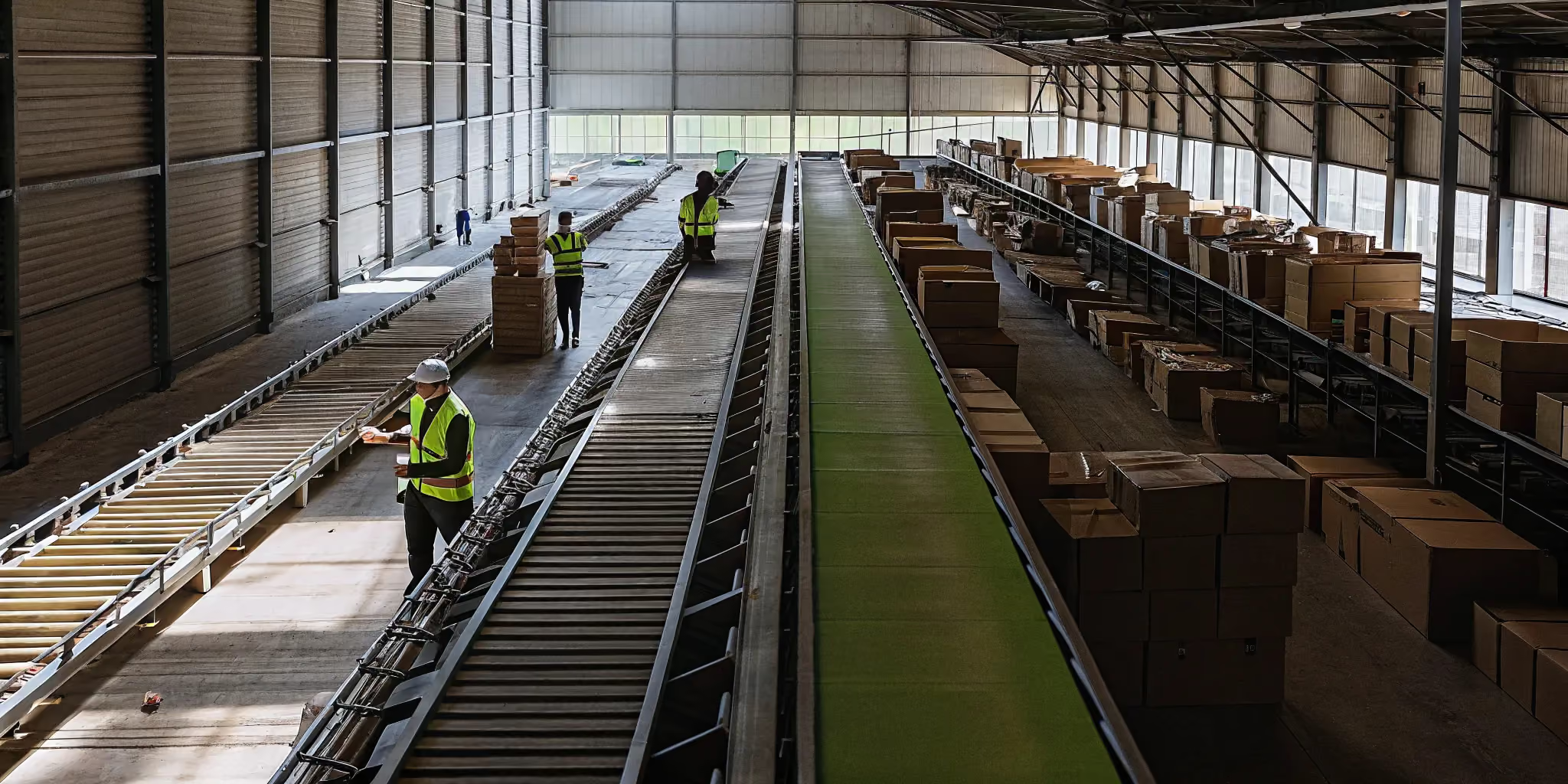
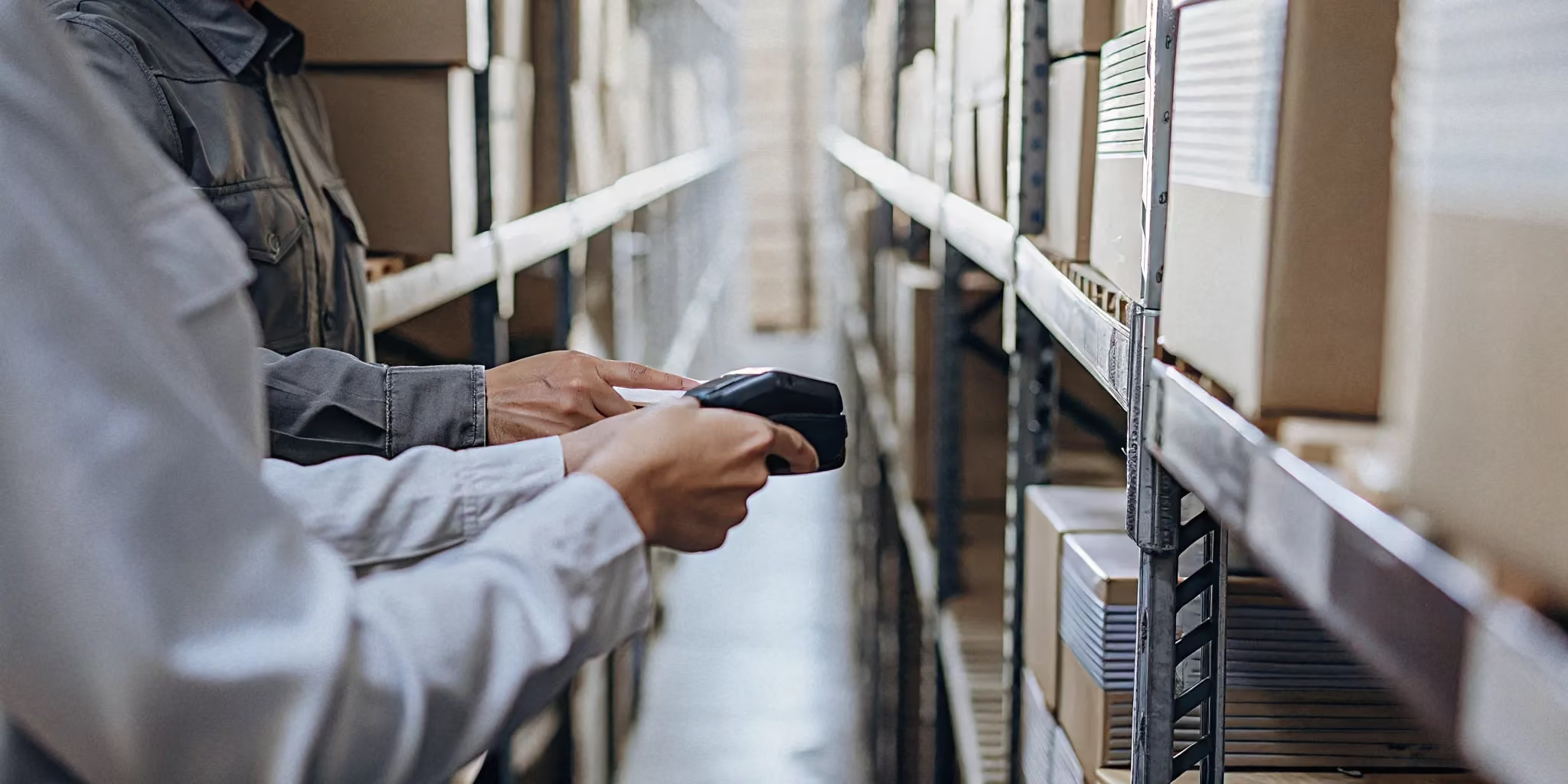
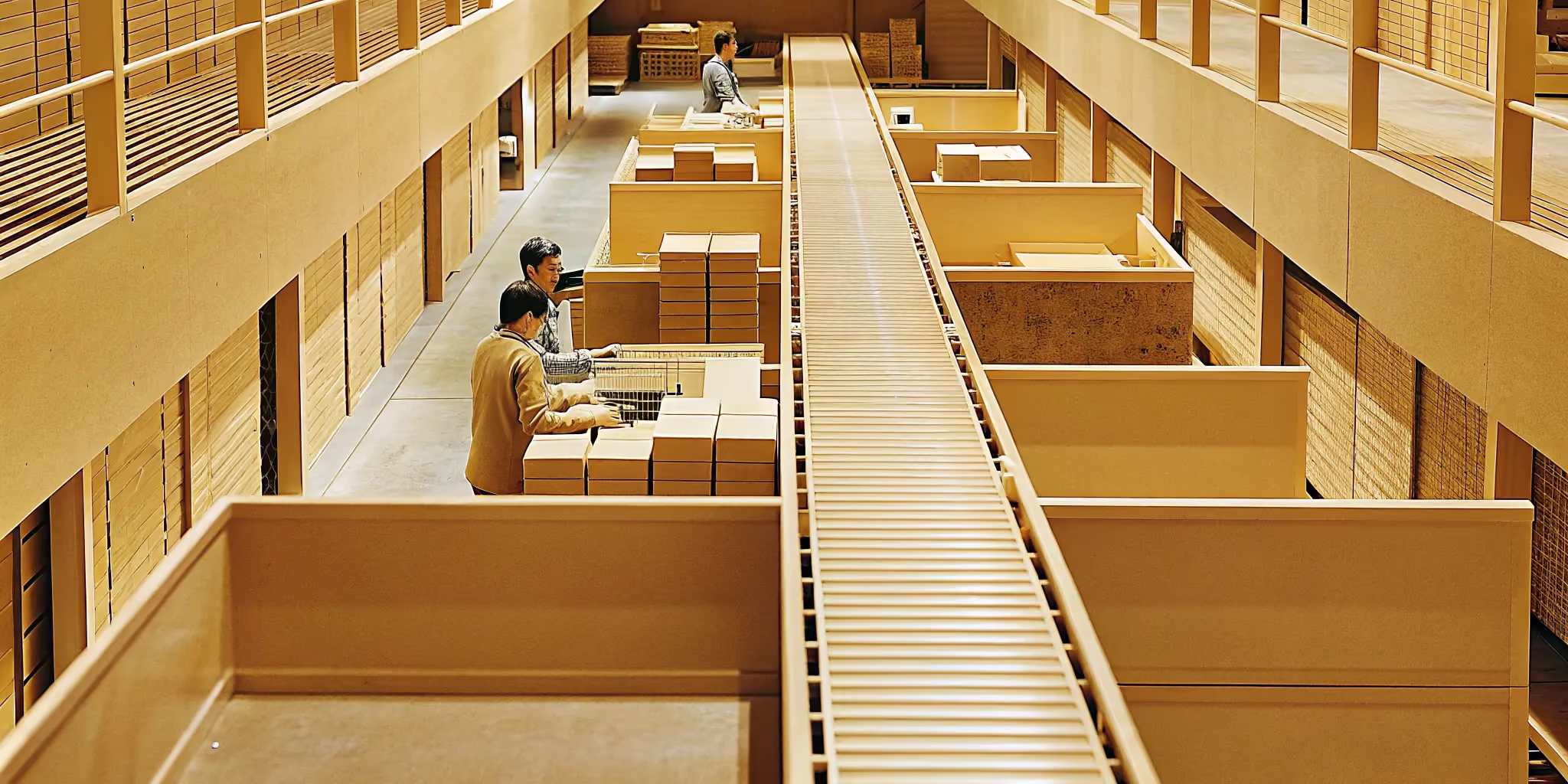
A returns processing center cannot be planned like a conventional fulfillment warehouse. Forward logistics moves predictable inventory toward customers, while reverse logistics must receive products in uneven conditions, inspect them, and route them to different outcomes. Every handoff affects labor, throughput, recovery value, and the time inventory remains unavailable. Schedule a consultation to learn how ReturnPro designs returns processing facilities for enterprise retailers.
Reverse logistics warehouse design coordinates receiving, inspection, sorting, refurbishment, and disposition around variable return volumes and fixed equipment requirements. Unlike standard warehouse planning, it must balance flexible workflows with the unalterable dimensions of specialized sorting and cleaning machinery, while keeping material movement efficient. Research on reverse logistics facility layouts identifies this balance as central to reducing material-handling costs.
That distinction becomes clearer when the facility is viewed as an operational system rather than a storage shell. The layout must connect each processing zone, accommodate changing demand, and preserve multiple paths for returned goods without creating unnecessary travel or bottlenecks. The planning principles below explain where reverse logistics facilities diverge from traditional fulfillment center designs. For a broader overview of how these facilities fit into a complete operating model, see the Complete Guide to Reverse Logistics for Retailers and Brands.
How Reverse Logistics Warehouse Design Differs from Traditional Fulfillment Center Planning
Reverse logistics warehouse design starts with a different operating assumption than forward-distribution planning: the facility does not receive uniform inventory and move it through a predictable pick-pack-ship sequence. Returned products arrive in different conditions, quantities, packaging states, and processing categories. The building must support diagnosis and decision-making before an item can re-enter inventory, be repaired, or move to another disposition.
Fixed equipment changes the layout equation
A traditional fulfillment center can often be reorganized around pallet racking, shelving, and adjustable workstations as demand changes. A returns facility has more fixed spatial constraints. Sorting and cleaning machines used in remanufacturing have unalterable dimensions, so departments must be shaped around the equipment rather than treating every area as interchangeable. These specialized zones support inspection, sorting, cleaning, refurbishment, and repackaging, each with distinct clearance, utility, and material-flow requirements. Research on reverse logistics facility layout identifies this equipment constraint as a central challenge in designing efficient remanufacturing operations.
Variable returns require flexible paths
Forward fulfillment generally moves products through a repeatable path with known handling steps. Returns processing must accommodate a sealed product that can be restocked, a damaged item requiring inspection, and a unit that needs cleaning or refurbishment. Processing time changes with condition, product category, and the disposition decision. Volume also fluctuates, which means a layout optimized for one return profile can create congestion when another profile arrives.
For that reason, material-handling paths should allow work to bypass unnecessary stations and reach the appropriate next zone. Flexible routing reduces avoidable travel and prevents a single overloaded department from interrupting the entire operation. Layout planning should also use updated demand and interaction data rather than assuming that departmental relationships will remain constant.
Planning for unequal areas and competing priorities
This creates an unequal-areas facility layout problem. The design must place departments close enough to reduce material-handling cost while preserving the rigid dimensions and operational requirements of critical equipment. A compact plan is not automatically an efficient one if it forces returns through unnecessary touches or leaves no room for condition-based routing. Unlike forward logistics, the objective is not simply to maximize storage density and outbound throughput.
The strongest layouts balance fixed machinery with adaptable work areas, clear paths, and room for changing return volumes. That distinction is why a returns center needs to be designed around inspection, transformation, and disposition, not retrofitted from a conventional fulfillment model.
What Are the Key Zones in a Returns Processing Facility?
A well-designed returns processing facility separates each decision and handling step while keeping the overall flow short. The core zones typically include receiving and sorting, inspection and grading, quarantine, refurbishment and repair, disposition staging, and outbound shipping. Together, these areas create a controlled path from returned item to its next destination.
Each zone serves a specific function in the processing sequence:
- Receiving and sorting , Unload, identify, and consolidate inbound returns with enough space to avoid dock bottlenecks. A first-pass sort directs items by product type, condition, or required processing path.
- Inspection and grading , Determine condition consistently using lighting, tools, testing equipment, and data-capture systems. Locating inspection near the initial sort reduces unnecessary movement.
- Quarantine , A physically defined area for items requiring fraud investigation, safety review, or additional verification before mixing with cleared goods.
- Refurbishment and repair , Dedicated stations for cleaning, component replacement, testing, repackaging, and documentation.
- Disposition staging , Clearly labeled lanes for resale, refurbishment, liquidation, recycling, or return-to-vendor.
- Outbound shipping , Direct connection to disposition lanes so completed units do not re-enter receiving or cross active work areas.
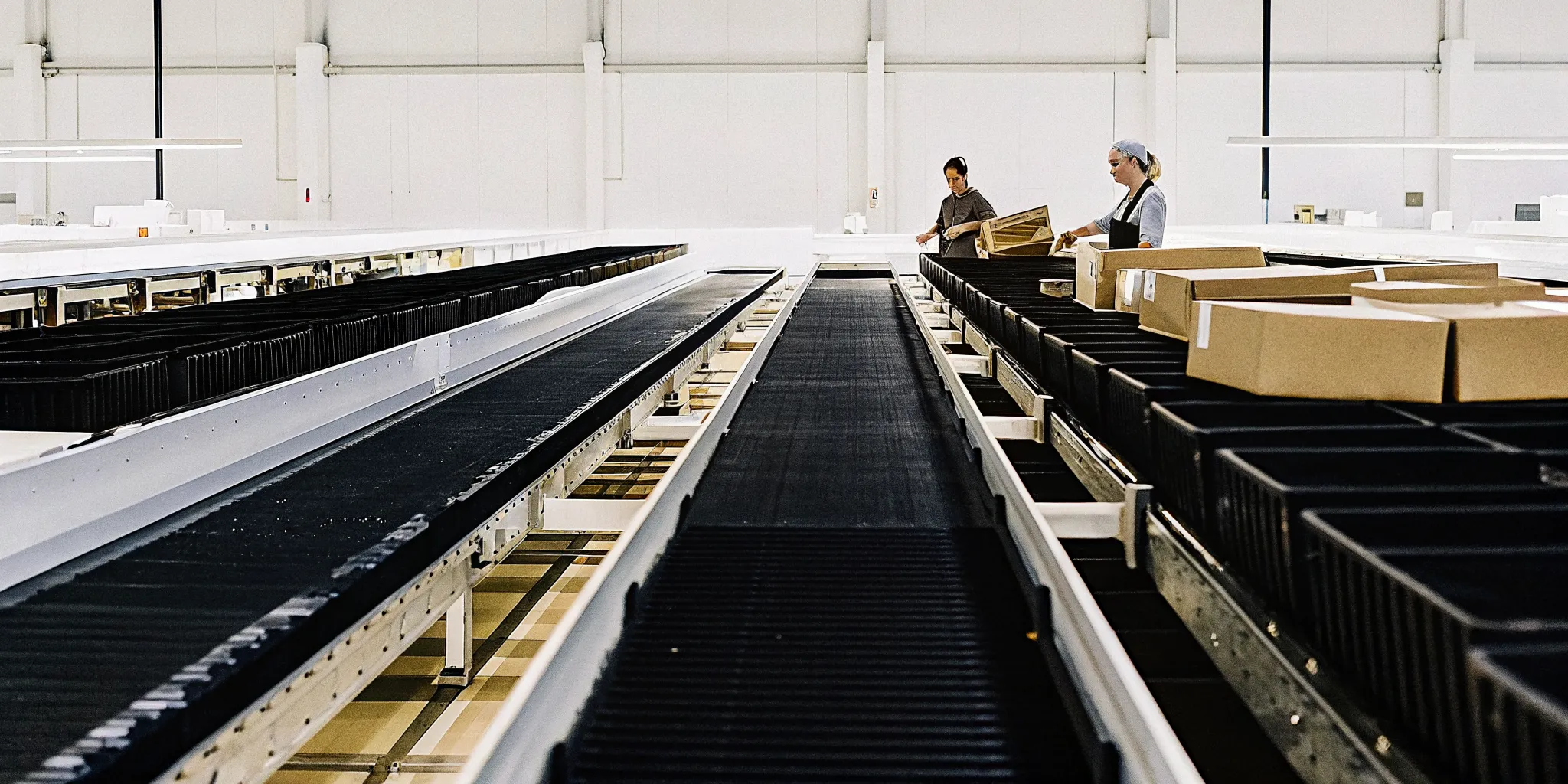
ReturnPro applies this operating model across 1.5 million square feet of processing space in 10 facilities, supporting more than 45 million units of annual processing capacity. Zone proximity matters as much as zone capacity. Seamless integration between inspection, refurbishment, repackaging, and shipping reduces touch-points, travel time, and opportunities for inventory errors. The reverse logistics process should be mapped as a material-flow sequence before assigning permanent equipment or storage locations. The layout must also leave room to adapt as return volumes and product mixes change.
How Should Grading and Inspection Stations Be Designed?
Inspection is where a returned item becomes a documented inventory decision. A well-designed station should support a multi-point protocol that records condition, function, completeness, and the evidence needed for the next disposition path. Standardized criteria keep grading consistent across shifts and facilities.
Condition grades should be based on observable standards rather than an inspector's personal judgment. A protocol may assess cosmetic wear, missing components, packaging condition, safety concerns. And signs of use, then assign a grade that maps directly to resale, refurbishment, liquidation, or recycling. Functional testing should be added wherever product performance affects value. For electronics and appliances, that can include power-on checks, connectivity, battery health, ports, and core operating functions.
Apparel requires a different inspection path. Stations may need space and equipment for laundering, pressing, minor preparation, and tag replacement before an item can return to sellable inventory. These activities should be positioned close enough to inspection to reduce handling, but separated from clean finished goods to protect quality.
Inspection equipment has fixed spatial requirements. Sorting and cleaning machines cannot be resized to fit a preferred layout. So the facility plan must accommodate their dimensions, utility connections, operator clearances, maintenance access, and safe material flow. Leave enough flexibility around fixed stations for variable inspection queues, seasonal surges, and future equipment changes. Shorter paths between inspection, cleaning, and refurbishment can reduce handling cost and help prevent bottlenecks.
Image capture should be part of the inspection record. Consistent photographs document cosmetic condition, serial numbers, accessories, and defects for resale listings, customer inquiries, claims, and audit reviews. ReturnPro's ISO 9001 quality certification and R2v3 responsible recycling certification provide a framework for disciplined processing, traceability, and responsible handling across inspection and downstream disposition workflows.
Disposition Routing Lanes: Resale, Refurbishment, Liquidation, and Recycling
A well-designed reverse logistics warehouse separates inventory into disposition lanes that preserve the highest possible value while controlling labor, storage, and handling costs. The right lane depends on the item's condition, category, resale potential, and current market demand. ReturnPro's Smart Touch intelligence evaluates condition data and operational rules to determine the next best path for each item.
The four main disposition lanes operate as an integrated routing system:
- Resale and restock , Items meeting quality and packaging standards return to sellable inventory. Fast routing matters because every unnecessary touch delays availability and increases obsolescence risk.
- Refurbishment , Functional products not ready for resale move to cleaning, repairs, component replacement, testing, and a second quality check. Dedicated workstations and clear handoffs between inspection and rework are critical.
- Liquidation , Recoverable items that do not justify individual refurbishment are consolidated into graded lots for secondary-market channels. ReturnPro's recommerce services support this value-recovery path.
- Recycling , Items with no practical recovery path require material identification, separation, compliance controls, and documented downstream handling.
ReturnPro processes more than 45 million units annually across 250-plus product categories and reports a 98% refurbishment and recycling rate. Its operations have diverted more than 100 million pounds from landfills. For enterprise teams planning reverse logistics warehouse design, those metrics illustrate why disposition logic, physical flow, and sustainability controls must be designed together from the start. See reverse logistics cost reduction strategies for a deeper look at how routing decisions affect the bottom line.
Technology Stack for Returns Warehouse Management
A returns warehouse needs technology that can track each item, coordinate work across locations, and adjust as return volumes and product conditions change. A warehouse management system (WMS) provides the operational layer, giving teams real-time inventory visibility across facilities while connecting receiving, inspection, grading, storage, and disposition. Barcode and RFID tracking preserve item-level identity through each movement, reducing manual searches and making serialized inventory easier to control.
Key technology capabilities that support reverse logistics warehouse design include:
- Real-time inventory visibility , Track items across facilities and connect receiving, inspection, grading, storage, and disposition into a single operational view.
- Automated routing and workflow management , Rules assign work based on product type, condition, value, destination, or required inspection, reducing manual decisions and improving throughput.
- Performance analytics , Identify where items wait, which lanes create bottlenecks, and how quickly inventory moves from receipt to its next productive outcome.
- Configurable workflows without custom development , ReturnPro's ReturnOps Visual Workflow Manager gives operations teams a drag-and-drop, no-code way to configure warehouse processes as product mix or retailer requirements change.
- AI-powered disposition intelligence , Smart Returns and Smart Touch apply machine learning to optimize routing decisions, adapting to changing patterns in return reasons and recovery outcomes.
ReturnPro also connects this operating model to more than 100 platform integrations, including Shopify, Salesforce, SAP, Oracle, Amazon, and Walmart. For enterprise teams evaluating returns management software, that combination of WMS visibility, configurable workflows, and adaptive intelligence is central to scalable reverse logistics warehouse design.
When Should You Build In-House vs Partner with a Returns Processing Specialist?
The build-versus-partner decision depends less on whether a company can operate a warehouse and more on whether it can sustain the specialized design. Technology, certifications, and variable workload that reverse logistics requires. A facility optimized for forward fulfillment is not automatically equipped for inspection, grading, refurbishment, recycling, and disposition routing.
| Decision factor | Build in-house | Partner with a specialist |
|---|---|---|
| Volume and economics | Can make sense at consistently high, predictable volume that keeps a dedicated operation utilized. | Better suited to variable, multi-category, or rapidly growing volume. Shared infrastructure reduces risk. |
| Capital investment | Requires facility construction, material-handling equipment, inspection stations, WMS integration, and ongoing maintenance. | Uses existing infrastructure. ReturnPro operates 1.5 million square feet across 10 facilities. |
| Expertise and compliance | Requires recruiting certified technicians, quality managers, and environmental compliance staff. | Specialist brings ISO 9001, R2v3, NAID AAA certification, and multi-category processing expertise. |
| Technology and integration | Must build or buy and maintain WMS, AI routing, and integration connections across multiple platforms. | Platform is already integrated with 100+ retail systems and uses AI for disposition routing. |
| Flexibility and scale | Volume fluctuations leave fixed capacity underutilized or overwhelmed. Harder to add new categories. | Multi-tenant facilities absorb variability across clients. ReturnPro handles 250-plus categories. |
Use return volume as the first filter. There is no universal break-even threshold because product mix, return condition, labor rates, service levels, and recovery value change the economics. Model the cost per unit at peak volume, not only the average month. If demand is seasonal or still growing, a partner like ReturnPro can provide capacity before a dedicated building becomes fully utilized. For a discussion of how facility design choices affect operational costs, see reverse logistics cost reduction strategies.
Frequently Asked Questions
How is reverse logistics warehouse design different from forward logistics design?
Forward logistics facilities move uniform inventory through a predictable pick-pack-ship sequence, optimized for storage density and outbound throughput. Reverse logistics warehouse design must accommodate variable return conditions, support inspection and diagnosis before disposition decisions, and shape departments around fixed sorting and cleaning equipment. These differences make returns centers fundamentally different from traditional fulfillment warehouses.
What zones should a reverse logistics warehouse include?
A returns processing facility needs receiving and sorting areas, inspection and grading stations, quarantine space, refurbishment and repair workstations, disposition staging lanes, and outbound shipping. Zone adjacency and material flow between them determine overall processing efficiency.
How does equipment affect reverse logistics warehouse layout?
Sorting and cleaning machines used in remanufacturing have unalterable dimensions. Departments must be shaped around this equipment rather than treating every area as interchangeable, which makes equipment placement a foundational planning constraint.
Should a company build an in-house returns facility or use a specialist?
The decision depends on return volume, capital availability, in-house expertise, technology requirements, and growth trajectory. A specialist like ReturnPro provides existing infrastructure, certified processes, AI-powered routing, and multi-category experience without the capital commitment of a dedicated facility.
Ready to improve your returns processing operations?
Planning a reverse logistics warehouse or upgrading an existing returns processing facility requires expertise in zone design, equipment placement, disposition routing, and technology integration. Schedule a demo with ReturnPro to discuss how our 1.5 million square feet of processing capacity, 10 facilities, and certified reverse logistics operations can support your enterprise returns needs.