Online shoppers now return about 30 percent of all products they buy from retail brands. That reverse flow creates a USD 743 billion returns problem for retailers each year. A 2023 PowerReviews survey of more than 9,000 consumers found that 87 percent of shoppers would stop buying from a brand that eliminated free returns. Worse, studies show that nearly half of all consumers have ended a relationship with a retailer specifically because of the returns experience.
A returns management platform is a cloud-based software system that automates and orchestrates the entire post-purchase returns lifecycle for retail businesses. It manages everything from customer-facing return portals and RMA approvals to carrier label generation, warehouse receipt, inspection routing, and final disposition. According to the U.S. Postal Service Office of Inspector General, leading platforms support flexible drop-off options and home pickup services while connecting directly with OMS, ERP, and WMS systems for real-time inventory tracking. The result is a data-driven reverse logistics workflow that reduces processing costs, recovers product value, and protects customer loyalty.
Handling these heavy reverse flows requires enterprises to examine how their post-purchase operations actually function at scale. Many retail brands still process returns through a patchwork of manual steps, disconnected software tools, and rising freight costs that erode margins daily. For supply chain leaders looking to optimize reverse logistics and recapture lost revenue, the decision starts with understanding what a modern returns management platform can deliver.
What Is a Returns Management Platform?
A returns management platform is an end-to-end software system that guides returned products from the moment a customer initiates a return request through to final disposition. The platform connects shoppers, carriers, warehouses, and financial systems into a single automated workflow, helping retailers reduce processing costs and improve recovery rates without adding head count.
Returns are an unavoidable reality of modern retail. A returns management platform is the technology backbone that orchestrates the post-purchase process from initiation through disposition. The system begins when a shopper requests a return. It ends when that item is restocked, refurbished, recycled, or resold. In between, the platform coordinates shipping carriers, warehouse receiving teams, inspection workflows, and financial reconciliation.
Core software layer for reverse logistics
To understand these platforms, it helps to look at reverse logistics itself. The USPS Office of Inspector General defines reverse logistics as the movement of goods from a consumer back to the point of manufacture, sale, or disposal. This is not simply shipping packages in the opposite direction. It is a complex, multi-path workflow that demands systematic planning and digital tracking to execute efficiently at enterprise volume. When a product comes back, multiple dispositions are possible. The item may be resold as new if it passes inspection, refurbished to restore value, recycled for materials, or sent to landfill as a last resort. A returns management platform tracks every unit through its journey and assigns the optimal path automatically. This intelligent routing helps brands recover maximum value from returned merchandise while reducing waste and environmental impact.
Portal versus platform: understanding the difference
Many retailers conflate a return portal with a returns management platform. A portal is the customer-facing interface where shoppers print a label. It serves a single purpose and lacks backend orchestration capabilities. A platform, by contrast, manages the entire operational network behind the scenes. It handles return merchandise authorization (RMA) rules, carrier selection, fraud detection, and integration with order management and warehouse systems. When a fraudulent return claim is detected, a platform can flag and block it automatically. When an exchange is more profitable than a refund, the system can route the transaction through the right workflow. These automated decisions drive real-time inventory updates and eliminate the manual data entry that creates errors and delays in legacy operations.
Scale of the returns challenge
The magnitude of the returns problem demands enterprise-grade solutions. In 2023, U.S. shoppers returned approximately 17.6 percent of online purchases by revenue, totaling more than USD 743 billion in returned goods according to the National Retail Federation. That volume translates to roughly USD 400 billion in lost sales value for retailers. To manage at this scale, brands need enterprise returns management infrastructure, not a basic portal. Retailers that invest in comprehensive platforms can offer the flexible return options modern shoppers expect, including package-less drop-offs, third-party location returns, and scheduled home pickups. According to PowerReviews, 92 percent of consumers are at least somewhat inclined to shop with brands that offer more sustainable return and shipping practices. The platform makes these capabilities operationally feasible at scale.
Ready to see how an integrated returns platform works? Schedule a personalized demo with our team.
Essential Features Every Returns Management Platform Should Offer
An enterprise-grade returns management platform must combine a customer-facing return portal, automated RMA rule enforcement. Multi-carrier label generation, fraud detection, smart exchange engines, and deep integration with OMS, ERP, and WMS systems. These features work together to reduce manual processing, cut shipping costs, and improve customer retention.
A modern returns management platform must deliver a frictionless experience for shoppers and efficient operations for retailers. That starts with a self-service return portal that lets customers initiate returns on any device, upload photos of damaged items, and choose their preferred resolution method.
Customer experience and automated workflow
Automated rule enforcement is the engine behind efficient returns management. The software must validate each request against return policies in real time. Blocking out-of-window claims and flagging suspicious patterns like wardrobing or serial returns before they hit the bottom line. When approved, the system generates shipping labels automatically and offers multi-carrier options that reduce transportation costs. Smart exchange engines preserve revenue that would otherwise be lost to refunds. When a customer initiates a return, the platform can suggest alternative sizes, colors, or complementary products. Offering store credit instead of cash refunds keeps working capital inside the business and drives repeat purchases. The USPS OIG report notes that modern platforms enable service innovations like package-less drop-offs and third-party collection points that improve the overall customer experience.
Integration with the retail technology stack
A returns system that runs in isolation creates more problems than it solves. The platform must connect with the brand's existing technology ecosystem through robust APIs. That means syncing with enterprise resource planning (ERP) systems like NetSuite or SAP, order management systems (OMS), and warehouse management systems (WMS). These integrations enable real-time inventory updates, automated refund processing, and seamless data sharing across departments. For a full view of integration capabilities, explore the retail technology integrations that leading returns platforms support. When systems share data transparently, warehouse teams know exactly which stock is returning before the truck arrives, preventing backlogs and reducing handling time.
DTC solutions versus enterprise-grade systems
Brands must choose between tools designed for direct-to-consumer operations and platforms built for enterprise scale. DTC-focused solutions like Loop or ReturnLogic serve single-channel Shopify brands effectively. Industry analysis shows that ReturnLogic stores saw a 30 percent drop in returns and a USD 5 boost in profit per return using key features. However, national brands and omnichannel retailers need broader capabilities. Large-scale retail requires deep support for multi-channel returns, carrier contract management, and physical logistics processing. Platforms like ReturnPro combine SaaS with hands-on supply chain operations, meaning returned units move from store back to shelf in days rather than months. Explore reverse logistics and supply chain services to see how integrated operations create a resilient reverse supply chain.
Returns Analytics Dashboard: The Metrics That Matter
A returns analytics dashboard turns returns data into actionable business intelligence by tracking return rate by SKU. Reason code distribution, cost per return, recovery rate, and customer lifetime value impact. These metrics feed product quality improvements, inventory planning, and fraud detection workflows.
Returns are not just a cost of doing business. They are a rich source of customer feedback and product performance data. An enterprise returns management platform captures this data in real time, letting brands identify emerging quality issues before they become widespread problems.
Essential metrics for returns management
Managing returned inventory effectively requires tracking specific KPIs on your analytics dashboard. Begin with return rate by SKU and category to identify which products underperform against customer expectations. Next, analyze reason codes to determine why items come back at the category and product level. If customers consistently report that a garment runs small, the sizing guide needs updating. Track cost per return, which encompasses shipping, labor, restocking, and refurbishment expenses. Knowing this true cost reveals the actual profit impact across your catalog. Recovery rate is another vital metric. It measures the percentage of product value recaptured after return processing. Items resold as new retain the most value, while refurbished, recycled, and disposed items yield progressively less. Finally, measure how returns affect customer lifetime value. According to PowerReviews, 72 percent of consumers are less likely to return an item after reading Q&A content on a product page. Demonstrating how data-driven insights can directly reduce return rates.
Using analytics to drive business decisions
Dashboard data should feed directly into product development and quality assurance processes. When a specific SKU shows elevated return rates due to a manufacturing defect, quality teams can flag the issue, communicate with suppliers, and implement corrective action. This closes the loop between returns operations and product design, preventing future losses. Analytics also power inventory planning. Knowing which products customers keep versus return allows merchandising teams to optimize stock levels. High-return items can be ordered conservatively, while high-retention products can be stocked aggressively. This data-driven approach to returns management reduces carrying costs and improves cash flow.
Platform Integrations and Operational Workflows
A returns management platform must integrate with ecommerce storefronts, OMS, ERP, WMS, and carrier systems to execute the return workflow from request to disposition. Each integration point eliminates manual steps and ensures data consistency across the enterprise.
A modern returns platform cannot operate as a standalone tool. To manage returns efficiently, it must be woven into the brand's existing operational fabric, connecting every system that touches an order from placement through final resolution.
The integration ecosystem
An enterprise returns management platform connects directly to storefront platforms like Shopify and WooCommerce, plus to OMS and ERP systems for inventory synchronization. When a customer initiates a return, inventory counts update across all channels in real time. The platform also links with WMS solutions and carrier APIs for end-to-end shipment tracking. The vendor policy hub is another critical integration point for marketplace sellers and multi-brand retailers, ensuring that return rules are enforced consistently across thousands of SKUs and vendor relationships.
The end-to-end return workflow
When a shopper initiates a return, the journey follows a defined sequence. A well-designed platform automates each phase to keep items moving from customer doorstep back to warehouse shelf without delay.
- Return request: The shopper initiates the return on the portal, selecting the item and reason for return.
- RMA approval: The platform validates the request against policy rules and issues a Return Merchandise Authorization.
- Label generation: The system automatically creates a shipping label and presents carrier drop-off options, including package-less and third-party location choices.
- Carrier pickup: The carrier scans the package and transports it to the designated return center.
- Warehouse receipt: Receiving teams scan incoming packages to log items back into inventory.
- Inspection and grading: Warehouse staff inspect each product to verify condition, confirm the return reason, and assign a disposition grade.
- Final disposition: The item is routed to its optimal next step: restock, refurbish, recycle, or resale on secondary markets.
Processing and disposition efficiency
Once inspection is complete, the item must be routed to the correct destination quickly. A slow disposition decision wastes warehouse space and delays value recovery. The best platforms automate this decision based on product condition, or return reason codes. According to the USPS Office of Inspector General, returned items can follow several paths: resale as new, refurbishment, recycling, donation, or disposal. Smart routing maximizes recovery value while minimizing waste, turning a potential loss into a recovered asset.
From Cost Center to Revenue Engine: ReCommerce and Recovery
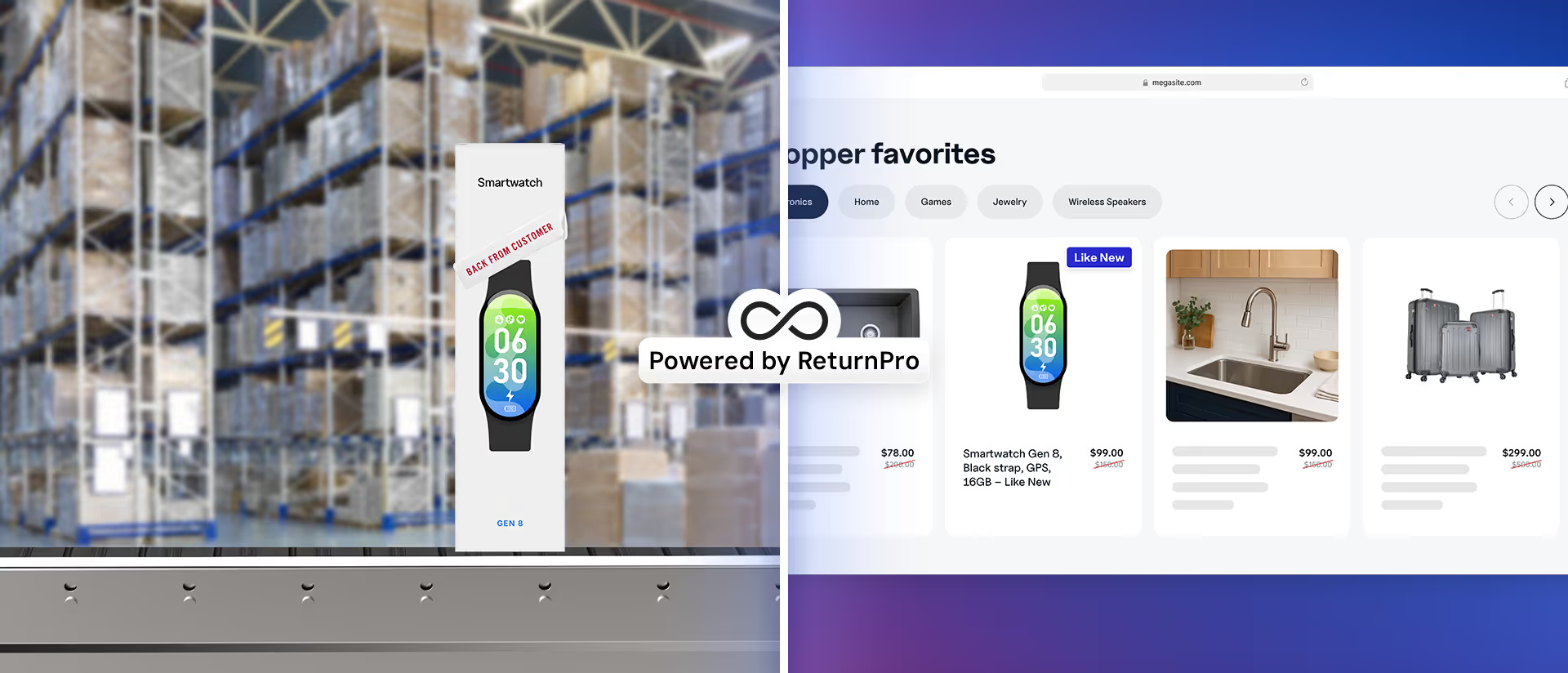
Integrated returns platforms combine SaaS with physical logistics and secondary market resale to transform returns from a pure cost into a revenue-generating operation. Processing over 45 million units annually across 1.5 million square feet of warehouse space, the integrated model achieves a 98 percent refurbishment and recycling rate.
Many brands view returns as an unavoidable loss. However, a comprehensive returns management platform can turn returned goods into a meaningful revenue stream through reCommerce. The practice of recovering value by reselling returned products through secondary markets.
Secondary market recovery
Secondary markets for open-box and refurbished goods are growing rapidly. Consumers actively seek discounted products that are functionally identical to new items but sell at a reduced price. By tapping into this demand, brands recapture value that would otherwise be written off.
The U.S. Postal Service Office of Inspector General confirms that returned goods can be sold as new, refurbished, recycled, or disposed. Brands using integrated platforms can choose the optimal path for each item based on condition and market demand, reducing waste and improving recovery rates.
Refurbishment, recycling, and the integrated model
A returns management platform does more than print labels. It manages how returned items are inspected, repaired, and recirculated. ReturnPro processes more than 45 million units each year across 1.5 million square feet of warehouse space. With focused investment in repair and cleaning operations, the company achieves a 98 percent refurbishment and recycling rate, keeping products in circulation and out of landfills. Through recommerce and secondary market recovery, brands can quickly list open-box and refurbished inventory on resale channels. Rather than absorbing return shipping costs as a pure loss, retailers recover a meaningful portion of the original sale price.CapabilitySaaS-Only PlatformIntegrated SaaS + Logistics + ReCommerceOnline return portalManages requests and labelsManages requests and labelsPhysical logisticsRequires third-party partnerHandled in-house across 1.5M sq ftItem refurbishmentNo repair services offered98% refurbishment and recycling rateSecondary market resaleRetailer lists items manuallyAutomated listing on resale channels
Stop treating returns as a cost. Start recovering revenue. Book your demo today.
How to Choose the Right Returns Management Platform for Your Enterprise
Selecting an enterprise returns management platform requires evaluating technology integration depth, shipping network coverage, physical logistics capability. Fraud prevention tools, and the platform's ability to scale with your business across multi-channel retail operations.
Choosing a returns management platform is a strategic decision that affects customer satisfaction, operational efficiency, and financial performance. Enterprise buyers must evaluate technology fit, logistics capability, and long-term partnership potential.
Technology integration and scalability
The platform must connect deeply with your existing retail technology stack. It needs to sync with your OMS, ERP, and WMS without custom middleware or brittle point-to-point integrations. High-volume brands processing millions of returns annually require API-first platforms that support real-time data exchange across every channel. Evaluate whether the platform supports the pricing and deployment model that fits your operational structure. Some platforms charge per return, which becomes expensive at scale. Others offer enterprise models that align costs with value delivered.
Shipping network and carrier management
Multi-carrier support is essential for cost control. The platform should negotiate rates across FedEx, UPS, USPS, and regional carriers, then intelligently route each return to the cheapest option based on package size, weight, and destination. Look for built-in carrier rate shopping and the ability to enforce carrier contracts at the point of label generation.
Physical logistics and reverse supply chain
SaaS-only platforms handle the digital layer of returns, but the physical work of inspecting, grading, refurbishing, and reselling still needs to happen. Some platforms leave this entirely to the retailer. Others, like ReturnPro, combine software with physical warehouse operations. For brands that lack dedicated reverse logistics facilities, the integrated model reduces complexity and accelerates time to value. To understand the full scope of what an integrated platform can deliver, explore the returns management platform solutions available for enterprise retail.Evaluation CriterionWhat to Look ForOMS and ERP integrationReal-time sync with NetSuite, SAP, or legacy systemsCarrier networkMulti-carrier rate shopping with contract enforcementFraud preventionMachine learning models for wardrobing and abuse detectionPhysical processingIn-house or partnered inspection and refurbishmentSecondary market accessAutomated listing on resale and liquidation channelsReporting and analyticsReal-time dashboards with SKU-level return reason data
Fraud prevention and policy enforcement
Returns fraud costs retailers billions annually. Look for platforms that use machine learning to detect patterns like wardrobing, where customers buy, use, and return items, and serial returning, where shoppers exploit lenient policies. The right returns fraud prevention tools protect margins without penalizing legitimate customers.
Frequently Asked Questions
What is a returns management platform?
A returns management platform is a software system that automates and orchestrates the returns process from customer request through final disposition. It connects return portals, carrier shipping, warehouse operations, and financial systems into a single workflow.
How is a returns management platform different from a return portal?
A return portal is a customer-facing interface for printing labels. A returns management platform includes the portal but adds backend capabilities like RMA automation, carrier rate shopping, fraud detection, warehouse integration, and secondary market resale.
What features should I look for in an enterprise returns platform?
Key features include automated RMA processing, multi-carrier label generation, fraud detection with machine learning. OMS and ERP integration, real-time analytics dashboards, physical inspection and refurbishment services, and secondary market resale capabilities.
How does returns analytics help reduce return rates?
Returns analytics track return rate by SKU, reason codes, and cost per return. This data feeds product quality improvements, sizing accuracy updates, and better product descriptions, addressing the root causes of returns before they affect revenue.
Can a returns platform integrate with my existing systems?
Enterprise returns platforms offer APIs and pre-built connectors for ecommerce platforms (Shopify, WooCommerce), ERP systems (NetSuite, SAP), OMS solutions, WMS platforms, and major carrier APIs. Integration depth varies by provider and should be verified during evaluation.
Transform Your Returns Operation With an Integrated Platform
A returns management platform is no longer optional for enterprise retailers. With USD 743 billion in returned goods annually and 87 percent of shoppers willing to abandon brands with poor return policies. The operational and financial stakes have never been higher. The right platform automates the entire reverse logistics lifecycle, from customer-facing portals and RMA approvals to warehouse inspection and secondary market resale, reducing costs while recovering revenue.
Enterprise retailers that invest in integrated platforms combining SaaS with physical logistics and reCommerce see faster processing times, higher recovery rates, and stronger customer retention. The choice between a basic portal and a comprehensive platform directly affects your margin structure and competitive position in an increasingly returns-conscious retail environment.