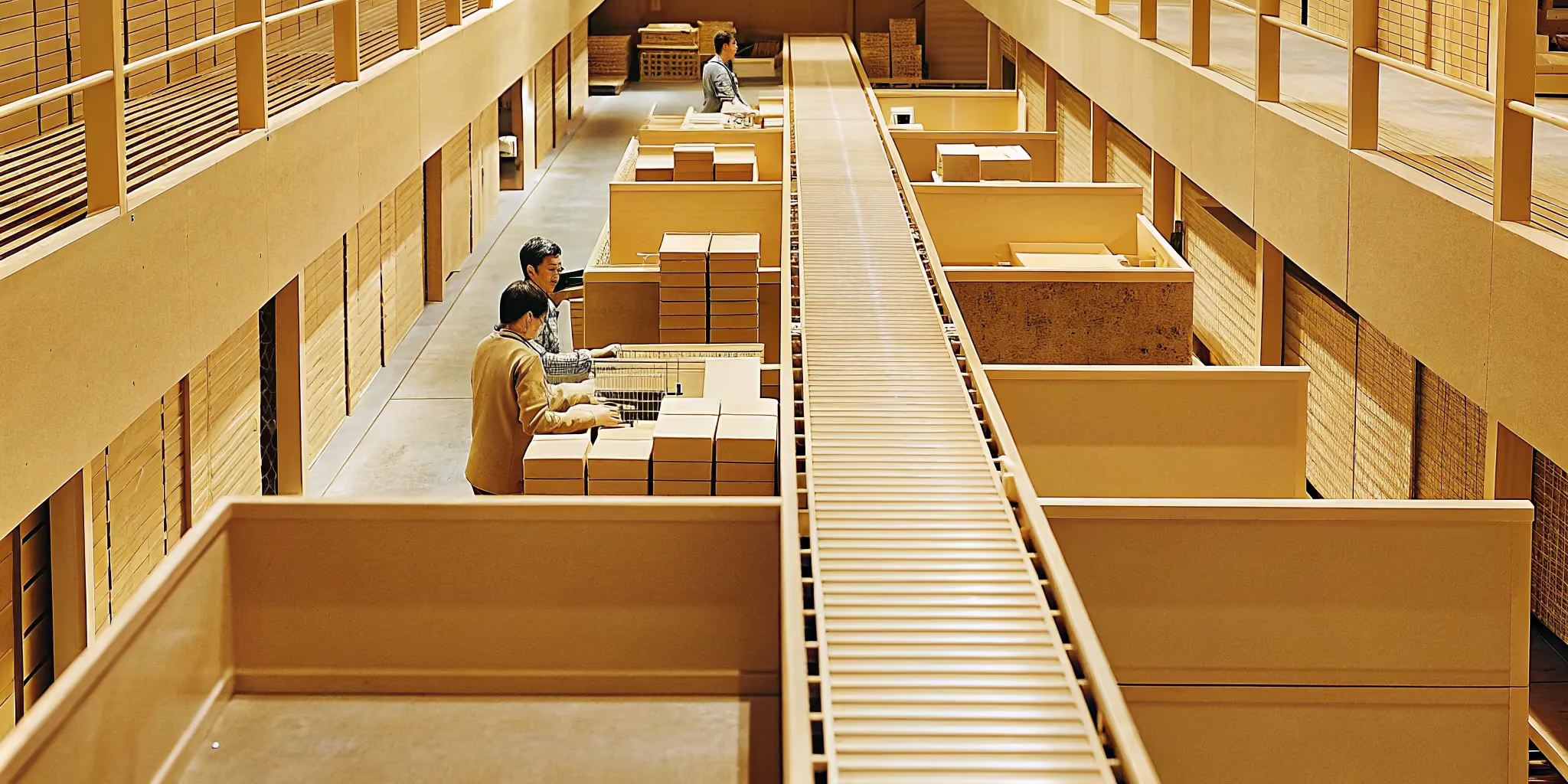
When a customer sends an item back, the return is not necessarily the end of the product's journey. The item may be inspected, repaired, restocked, resold, recycled, or disposed of responsibly. The process behind those decisions can determine how quickly inventory returns to circulation and how much value a retailer recovers.
In plain English, what is reverse logistics? It is the process of moving goods from consumers back to sellers or manufacturers so the business can recover value, manage the item's next destination, or handle disposal properly. This definition aligns with the National Institute of Standards and Technology (NIST): NIST describes reverse logistics as managing goods flowing back to recover value.
For retailers, that means treating returns as an organized supply chain flow rather than an exception handled one package at a time. The complete process becomes easier to understand when you look first at what moves backward, why it moves, and what can happen after it arrives.
What Is Reverse Logistics?
Reverse logistics is the process of managing goods as they move from a consumer back to a retailer, seller, or manufacturer. The purpose is not simply to receive a package and issue a refund. It is to determine what happens next so the business can recover as much value as possible. The National Institute of Standards and Technology (NIST) defines reverse logistics as managing the flow of goods back to sellers or manufacturers for value recovery.
For a retailer, that flow can begin with a customer return and continue through transportation, receiving, inspection, sorting, repair, restocking, resale, recycling, or responsible disposal. A product might return to available inventory, move to a refurbishment channel, or be separated for parts and materials. The right outcome depends on the item's condition, demand, return reason, and handling requirements.
Why returns are part of reverse logistics
Retail returns are one of the most familiar examples. When a customer sends back an item, the retailer must coordinate more than the physical shipment. Teams need to track the return, confirm its condition, decide its next destination, update inventory records, and make sure the item reaches the appropriate channel. Those steps turn a returned product from a cost to manage into a potential asset.
This is especially important for retailers handling returns across stores, fulfillment centers, ecommerce orders, and third-party sales channels. Without a consistent process, products can sit too long, lose resale value, or be sent to the wrong destination. Clear rules help teams identify which goods can be sold again, which need repair or refurbishment, and which should be recycled or disposed of properly.
Reverse logistics is a system, not a single shipment
At low volume, a retailer may manage returns with a few manual steps. At scale, returns handling requires the right systems and processes to connect customer service, transportation, warehouse operations, inventory, and resale decisions. Visibility across those handoffs helps retailers make faster decisions and recover more value from each item.
In simple terms, forward logistics moves products out to customers. Reverse logistics brings products back and gives them a deliberate next step. For a broader look at the process, stages, and retail applications, read the complete guide to reverse logistics for retailers and brands.
How Reverse Logistics Differs from Forward Logistics
Forward logistics moves products in a planned direction: from a supplier or warehouse through fulfillment and delivery to the customer. Reverse logistics moves goods back through the supply chain, often after a purchase, so a business can inspect each item and decide what happens next. NIST describes it as managing goods in the opposite direction of the traditional supply chain, with the goal of recovering value.
The difference matters because returns do not follow one predictable route. A returned product may be restocked, repaired, refurbished, resold through another channel, recycled, or disposed of responsibly. That makes reverse logistics a decision-based process rather than a simple delivery loop.
Forward logistics compared with reverse logisticsAspectForward LogisticsReverse LogisticsDirectionOne-directional, from a warehouse or supplier to the customer.Moves from the customer back to a retailer, manufacturer, or recovery partner, then may follow several paths.PredictabilityUsually planned around known inventory, orders, and delivery destinations.Less predictable because timing, reason for return, product condition, and final destination can vary.Packaging conditionProducts typically leave in standardized, shipment-ready packaging.Packaging may be opened, damaged, incomplete, or unsuitable for another shipment.Value recovery goalDeliver the right product efficiently while protecting its sale value.Recover as much value as possible through restocking, repair, refurbishment, resale, recycling, or another disposition.Processing complexityFollows a defined pick, pack, ship, and delivery workflow.Requires receipt, inspection, classification, and a disposition decision before the next step.
Returns are also large enough to make this distinction operationally important. The National Retail Federation reports that 17.6% of ecommerce sales, worth $340 billion, were returned, compared with 10% of brick-and-mortar sales, worth $510 billion. For retailers, a clear reverse flow can turn an unpredictable cost center into a structured recovery process. Learn how supply chain services can support that flow across inspection, disposition, and value recovery.
The Five Stages of a Reverse Logistics Cycle
A reverse logistics cycle turns a returned or end-of-life product into a clear next action. The process varies by product category, condition, and safety requirements, but most effective programs move through five connected stages.
1. Return initiation and collection
The cycle begins when a customer sends an item back, whether because of a return, warranty claim, exchange, recall, or end-of-life program. The retailer authorizes the return, provides collection instructions, and routes the item to the appropriate facility. At arrival, workers sort products by category, reason for return, and handling requirements. Research on waste reverse logistics identifies collection as the phase in which end-of-life products are gathered for further inspection (NIH research). Clear intake data helps prevent items from sitting in the wrong queue.
2. Inspection and grading
Next, the item is examined and assigned a condition grade. The review may cover appearance, functionality, packaging, missing components, and signs of damage or use. Grading creates a consistent basis for deciding whether an item can return to inventory, needs work, or should be recovered through materials. Inspection is a core control point because it determines whether a product follows a reuse, refurbishment, recycling, or disposal path. The same NIH research describes inspection as part of the process used to determine whether returned items can be reused or must be recycled.
3. Disposition decision
Once the condition is known, the operation selects the highest-value practical route. A sellable item may be restocked. A product with cosmetic or functional issues may go to refurbishment. Items that cannot be safely or economically recovered may be recycled or liquidated. The decision should account for recovery value, labor, transportation, customer expectations, and any product-specific compliance requirements. This is where standardized rules turn inspection data into a repeatable operating model.
4. Processing
Processing is the hands-on work required by the disposition plan. It can include cleaning, testing, repair, refurbishment, remanufacturing, repackaging, parts harvesting, or material separation. The collection, inspection, and processing stages work together to recover value efficiently, rather than treating every return as waste. For products that contain batteries, chemicals, or other regulated materials, teams also need the right classification and handling procedures before transportation or recycling.
5. Recommerce or responsible disposal
The final stage puts the outcome into action. Refurbished or open-box products can return to the primary channel or move through recommerce and resale channels. Recovered parts and materials may support another production cycle, while products with no viable recovery path should be disposed of responsibly. A well-run program measures these outcomes, not just the number of returns received. ReturnPro's 98% refurbishment and recycling rate illustrates what a coordinated program can achieve at scale.
Why Reverse Logistics Matters for Retail Profitability
Returns are not simply a customer service expense. They are an inventory flow that can either erode margin or recover value, depending on how quickly and accurately a retailer manages each item. The scale makes the difference material: the National Retail Federation reports that 17.6% of ecommerce sales. Worth $850 billion, were returned, compared with 10% of brick-and-mortar sales, worth $371 billion. IHL Group reported $1.8 trillion in worldwide returns in 2022.
Returns create an opportunity for cost recovery
A returned item is not automatically lost revenue. After receiving and inspecting it, a retailer may be able to restock it, refurbish it, route it to a resale channel, or recover value from its components. Each decision should reflect the item's condition, demand, handling cost, and expected resale value. Faster disposition also reduces storage, markdown, and labor costs while returning sellable inventory to the active assortment.
The US returns market is estimated at $850 billion annually, which shows why even small improvements in recovery rates can affect operating results. A returns management platform can help standardize routing decisions, keep item-level data visible, and give teams the information needed to choose the most profitable next step.
Easy returns can support customer retention
Customers are more likely to buy when they understand what will happen if a product is not right for them. A clear, convenient returns experience reduces purchase risk and can turn a return into an exchange or a future order. That benefit depends on execution: confusing policies, slow refunds, and poor status updates can weaken trust even when the original purchase went well.
Connecting the returns experience to inventory and customer data helps retailers resolve issues efficiently without treating every return as a lost relationship. The result is a process that protects both customer confidence and margin.
Recovery keeps useful products in circulation
Reverse logistics also supports sustainability by keeping usable products in the resale, refurbishment, or reuse cycle instead of sending them directly to a landfill. Better sorting and disposition decisions reduce unnecessary waste and make more of the original product, materials, and transportation investment count. For retailers, that environmental gain can reinforce a practical financial goal: recover more value from every item that comes back.
What Does a Well-Run Reverse Logistics Program Look Like?
When reverse logistics works well, returns do not sit in disconnected queues or move through the same path regardless of condition. Technology, physical operations, and resale channels work as one program, giving teams a clear view of each item from arrival through its next destination.
Connected systems and faster decisions
An integrated returns management platform connects return authorization, shipment, warehouse, inventory, and disposition data. That shared view helps teams spot delays, assign the right handling path, and measure performance without stitching together spreadsheets or separate reports.
Speed is a practical test of whether the system is working. ReturnPro has reduced returns processing time from more than 60 days to 18 days. Faster processing can put sellable inventory back into circulation sooner and give operators more time to address exceptions before value declines.
Clear disposition rules and measurable recovery
A strong program applies consistent rules after inspection. Items in resalable condition can return to stock. Others may go to refurbishment, repair, donation, recycling, or recommerce channels. Automating these decisions helps prevent good inventory from being treated as waste while ensuring damaged or end-of-life products receive appropriate handling.
Recovery rate is one useful measure of execution. ReturnPro reports a 98% refurbishment and recycling rate, showing how disposition decisions can prioritize recovery rather than default disposal.
Operational and sustainability outcomes
The best programs connect financial performance with responsible resource use. Research on extended producer responsibility identifies reverse logistics as a way to close material loops through recycling and refurbishment (NIH research). In practice, that means a returned product or its materials have a defined path back into productive use whenever feasible.
These outcomes are visible in the metrics: processing time, recovery rate, refurbishment rate, inventory turnaround, and the share of items routed to reuse or recycling. For a broader framework, see the complete guide to reverse logistics for retailers and brands.
Frequently Asked Questions
What is reverse logistics in simple words?
It is the process of moving products backward through the supply chain after a sale. A retailer may receive an item from a customer, inspect it, and decide whether to restock, repair, refurbish, resell, recycle, or dispose of it. The goal is to recover as much value as practical while giving the product a clear next step.
What are the 5 R's of reverse logistics?
The five R's are Returns, Reselling, Repairs, Repackaging, and Recycling. Together, they describe common ways to handle goods that come back. A returned item might go directly back into inventory, receive a repair or new packaging. Move into a resale channel, or be recycled when recovery is no longer practical.
What is included in a reverse logistics process?
A typical process starts with return collection and sortation. The item is then inspected and evaluated for condition, value, and safety. The retailer chooses a disposition path, processes the item, and sends it to restock, refurbishment, resale, recycling, or disposal. Clear decisions at each stage help reduce delays and unnecessary handling.
What companies use reverse logistics?
Any retailer or brand that manages product returns, exchanges, repairs, end-of-life goods, or resale can use reverse logistics. It is especially relevant for ecommerce, fashion, electronics, consumer goods, and omnichannel businesses. The operating model may differ by product and volume, but the core need is the same: control what happens after goods move back from the customer.
Ready to improve your reverse logistics?
A clear, connected returns process can help your team recover more value from returned products and make day-to-day decisions easier. Book a returns assessment to discuss how ReturnPro can help optimize your reverse logistics operations.