Retailers have invested in the systems to manage returns. eCommerce platforms, order management systems (OMS), warehouse management systems (WMS), point-of-sale technology, fraud prevention technologies, customer service platforms, and reverse logistics solutions, each investment addressed a specific operational need. But these systems were built independently, each designed to solve a single problem. None of them were designed to share data with the others.
Despite these investments, retailers still struggle to answer a simple question.
“Do we have complete returns data?”
The answer is not as easy as yes or no. Complete returns data does exist, but it is scattered across disconnected systems. Each one captures what it sees when a return moves through it, making it difficult to measure what returns are costing the business.
U.S. consumers returned $850 billion in merchandise, representing 16.9% of total retail sales. (NRF 2025) At that volume, the inability to see the true cost of returns within disconnected systems is a direct margin problem. It compounds with every return processed.
Returns Data Tells You What Happened. Returns Visibility Tells You What It Cost.
A return moves through an eCommerce platform, an OMS, a WMS, store operations, return and fraud processing, customer service, and reverse logistics. Each system generates data, but none of them provide a complete view of what returns cost companywide.
Returns data is what each system captures. Returns visibility is what all the systems report together, providing the true cost of returns. When that data remains disconnected, visibility gaps grow with every touchpoint in the returns process.
Where Fragmented Returns Data Costs You Money
Five specific cost areas accumulate every time a return is processed without complete data from all systems.
Inventory Latency
Returned inventory sits idle while systems wait on each other. Approvals, inspections, and disposition decisions stall because the data needed to make them exists elsewhere.
• The Operational Bottleneck: Items sit in warehouse staging areas or transit loops because the WMS cannot verify the return's authorization from the e-commerce platform.
• The Financial Impact: Every day an item remains idle, its recovery value depreciates, and holding costs climb.
Delayed Dispositioning
Without visibility across the reverse supply chain, retailers cannot identify the highest-value path for each returned item. When disposition decisions default to the path of least friction, the most profitable path is overlooked.
• The Operational Bottleneck: Lack of real-time inventory and demand data forces warehouses to use blanket routing rules for returned goods.
• The Financial Impact: High-value items eligible for immediate recommerce or resale sit in processing queues, while items with strong resale value are mistakenly routed to low-recovery liquidation channels.
Duplicate Processing
Disconnected systems generate redundant work, causing labor costs to rise and throughput to slow down.
• The Operational Bottleneck: Manual handoffs must fill the gaps between software systems that cannot talk to one another, requiring employees to manually re-enter data.
• The Financial Impact: Workers repeat physical product inspections and verification reviews at multiple points in the return lifecycle, doubling the labor cost per returned unit.
Refund Inefficiencies
Consumers expect a refund or store credit immediately after initiating a return. When return receipt, inventory processing, and refund issuance live in separate systems, the process cannot move faster than the slowest handoff between them.
• The Operational Bottleneck: Customer service teams must manually track down a return’s physical location in a warehouse before approving a delayed refund.
• The Financial Impact: Processing costs skyrocket due to increased customer service inquiries. Concurrently, 71% of consumers report that a poor returns experience directly damages brand loyalty, hurting customer lifetime value. (ReturnPro, 2026)
Recovery Blind Spots
Without complete returns analytics, retailers are left guessing how to handle their reverse inventory. The recovery value available in every returned item gets lost in fragmented systems.
• The Operational Bottleneck: Decision-makers cannot see cross-system data to analyze which products should be restocked, refurbished, recommerced, liquidated, returned to the vendor, or recycled.
• The Financial Impact: Retailers face a gap between reported return costs and the true cost of returns that compounds across every transaction without complete data from all systems.
These five areas trace back to the same cause: systems that create a data-flow gap. The reason that gap persists has less to do with awareness than with how retail technology was built.
Why the Problem Persists
Omnichannel returns are structurally complex. eCommerce orders are bought online and returned in-store (BORIS). Store purchases are returned through carrier networks. Marketplace returns move through third-party logistics and recovery partners. Each channel runs on its own system. Each system delivers data the others cannot see.
The technology investments that built those systems were each designed for a specific function. Returns management platforms, reverse logistics software, fraud prevention platforms, and warehouse systems each solved the problem in front of them. Creating a layer that connects all of them into a single returns reporting dashboard was never the primary design goal.
Returns became the most data-rich process in retail without becoming the most connected one. The result is a design gap that compounds cost with every return.
How Unified Returns Intelligence Changes the Equation
Unified returns intelligence creates a single operational view across systems that were never designed to work together. It connects what each system reports into a complete picture of returns companywide. This connected view changes the equation for analytics, automation, fraud detection, and recovery.
Returns Analytics Built on Complete Data
When data from all systems feeds a single view, return behavior, root causes, inventory performance, and recovery outcomes are visible. Retailers can understand what is driving costs and act on complete information.
Returns Automation Across Connected Systems
Returns automation depends on real-time data from all systems. With unified returns intelligence, return authorizations, refund workflows, inventory updates, disposition decisions, and recovery routing run on connected data, removing the manual handoffs that disconnected systems require.
Fraud Detection with the Full Picture
Fraud models are only as effective as the data they can access. When customer behavior, transaction history, and return outcomes exist in separate systems, visibility gaps make risk signals harder to identify and fraud patterns more difficult to detect. Unified returns intelligence connects that data, improving detection accuracy and reducing false positives.
Recovery Decisions Backed by Complete Data
AI-powered reverse logistics routes returned items to the recovery path with the highest expected value. Routing decisions made with complete data capture the full value available in every returned item.
The Cost of Doing Nothing
Fragmented returns data erodes margins across five cost areas, in every system that touches a return. By the time those costs appear in a P&L, they have been compounding across thousands of transactions.
This compounding creates a gap between the true cost of returns accumulating throughout the business and what each system reports. This is where margin erosion becomes difficult to see and even harder to measure. Unified returns intelligence closes that gap. It connects what each system reports into a complete cost picture, giving retailers the data to act on it.
FAQs
What is the true cost of returns?
The true cost of returns is the total financial impact of a returned item across its entire lifecycle, including refunds, reverse logistics, labor, inspection, fraud losses, inventory holding costs, customer service interactions, inventory depreciation, and recovery outcomes. Industry research shows that traditional accounting methods, refund issued and cost of goods reversed, capture only about 35% of the total economic impact of returns. (Instirio Research, 2026)
What is fragmented returns data?
Fragmented returns data is information that exists within multiple disconnected systems without a unified view. Each system in the returns process, eCommerce platforms, warehouse management systems (WMS), order management systems (OMS), fraud prevention platforms, and reverse logistics providers, captures data independently. The data remains isolated within individual systems. The result is a data-flow gap that prevents retailers from seeing the true cost of returns in their operations.
Why is fragmented returns data costly for retailers?
Fragmented returns data is costly for retailers because it increases processing costs, delays inventory recovery, reduces recovery value, and makes the full cost of returns difficult to measure. It contributes to five sources of hidden cost: inventory latency, delayed dispositioning, duplicate processing, refund inefficiencies, and recovery blind spots. These costs compound across every return processed when returns data remains disconnected between systems.
What is returns management software?
Returns management software is a platform that coordinates the receipt, inspection, disposition, and refund processing of returned products. It connects data from all systems to improve visibility into return costs, recovery outcomes, and operational performance.
How can retailers automate returns?
Retailers can automate returns through returns management platforms, AI-driven decisioning, automated routing, refund processing, and inventory synchronization. Returns automation is most effective when systems share data in real time, eliminating manual handoffs that increase costs and slow processing.
What is returns visibility?
Returns visibility is the ability to see what all returns systems report together as a single operational picture. Returns visibility goes beyond the data captured by individual systems and shows how returns activity impacts inventory, recovery value, fraud exposure, and operational costs throughout the business.
What are the blind spots in recovery?
Recovery blind spots are gaps in visibility that prevent retailers from identifying the true value of returned products and the highest-value path for each item. Without returns analytics reported from all systems, retailers cannot determine which items should be restocked, refurbished, recommerced, liquidated, returned to vendors, or recycled. Products that could be valued as "like new" or "open box" get routed to liquidation instead of higher-value recovery channels. Recommerce opportunities are missed when the data needed to assign recovery value is fragmented.
How does a retail return move through the supply chain?
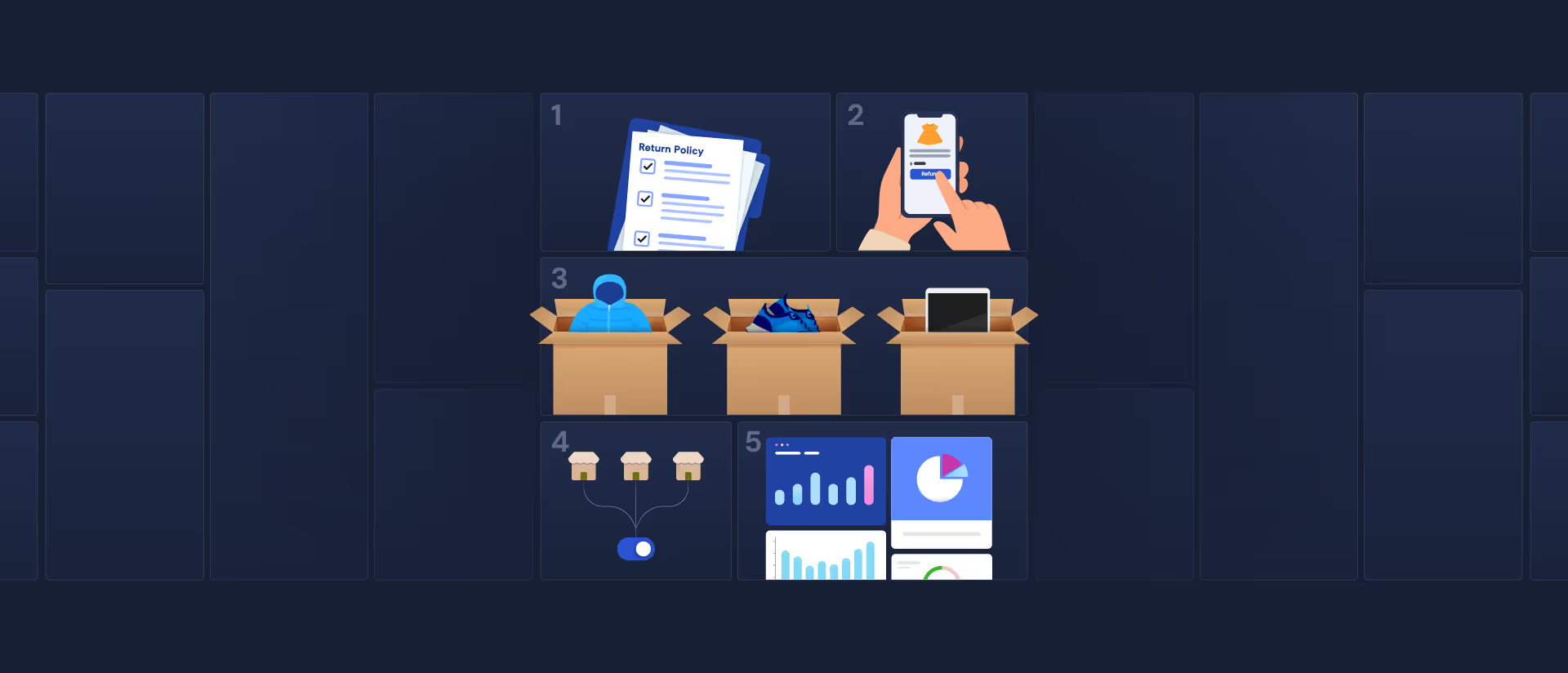
A retail return moves through a series of stages, each dependent on the one before it. It begins when a customer initiates a return through an eCommerce portal, in-store, or a carrier drop-off. The retailer then consolidates that return, either through an internal returns operation or a returns management partner. From there, the return is validated against the original order and return policy, processed through inspection to assess condition, and dispositioned based on recovery value. Depending on the item, disposition routes it to restock, refurbishment, recommerce through secondary markets, liquidation, return to vendor, or recycling.
What is unified returns intelligence?
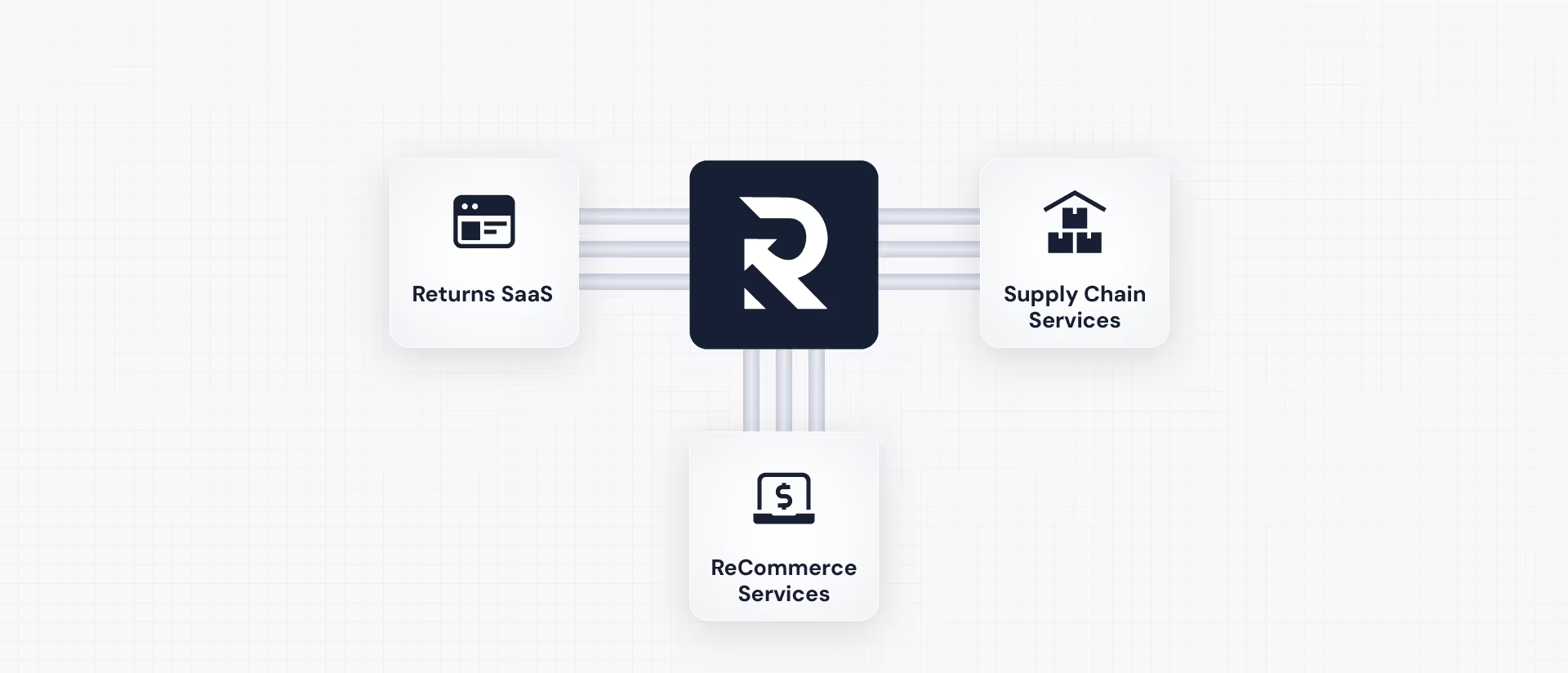
Unified Returns Intelligence is a strategy and technology framework that brings together data, decisions, and actions from across the entire returns lifecycle into a single view. By connecting returns management, fraud prevention, reverse logistics, inventory recovery, and recommerce operations, it gives retailers a complete understanding of their true returns costs and recovery opportunities. The result is more informed decision-making, greater operational efficiency, and higher recovery value on returned merchandise.
How does unified returns intelligence improve fraud detection?
Unified returns intelligence improves fraud detection by providing a complete view of customer behavior, transaction history, and return activity from all returns-related systems. When fraud models rely on fragmented data, they can only evaluate what a single system sees, creating blind spots that allow abuse to go undetected or legitimate customers to be flagged incorrectly. By connecting data across returns management, fraud prevention, reverse logistics, and recovery operations, retailers gain a more accurate picture of risk, enabling them to improve fraud detection rates, reduce false positives, and protect margin from avoidable losses.
What is AI-powered reverse logistics?
AI-powered reverse logistics is the application of machine learning, predictive analytics, and intelligent routing to improve recovery outcomes, reduce costs, and accelerate returns processing. These systems analyze return conditions, inventory data, customer behavior, recovery options, and logistics variables across connected systems to determine the most effective disposition and routing decisions for returned products.