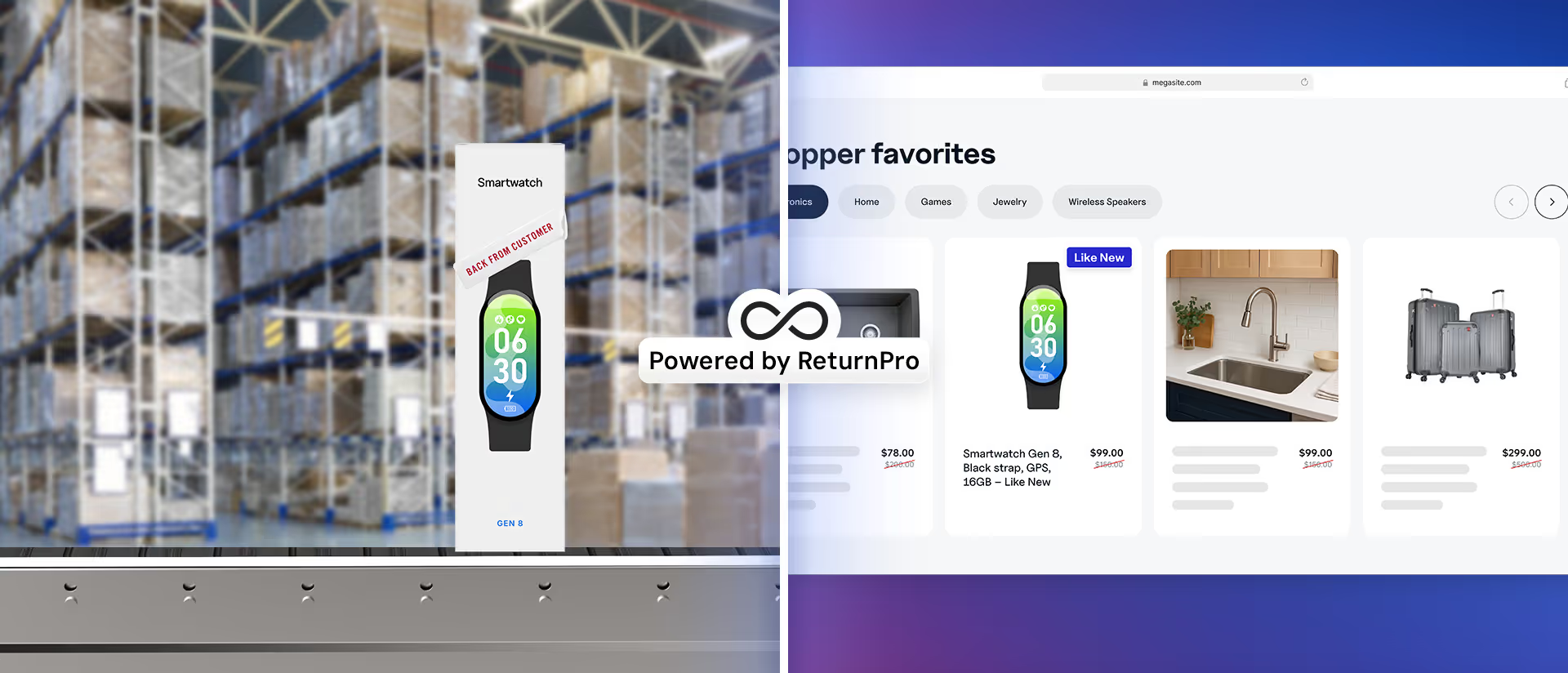
More retailers are waking up to the idea that returns can be a value engine, not just a cost center. The potential is clear: higher recovery rates, improved customer loyalty, and more sustainable operations.
While the awareness is growing, execution is still lagging.
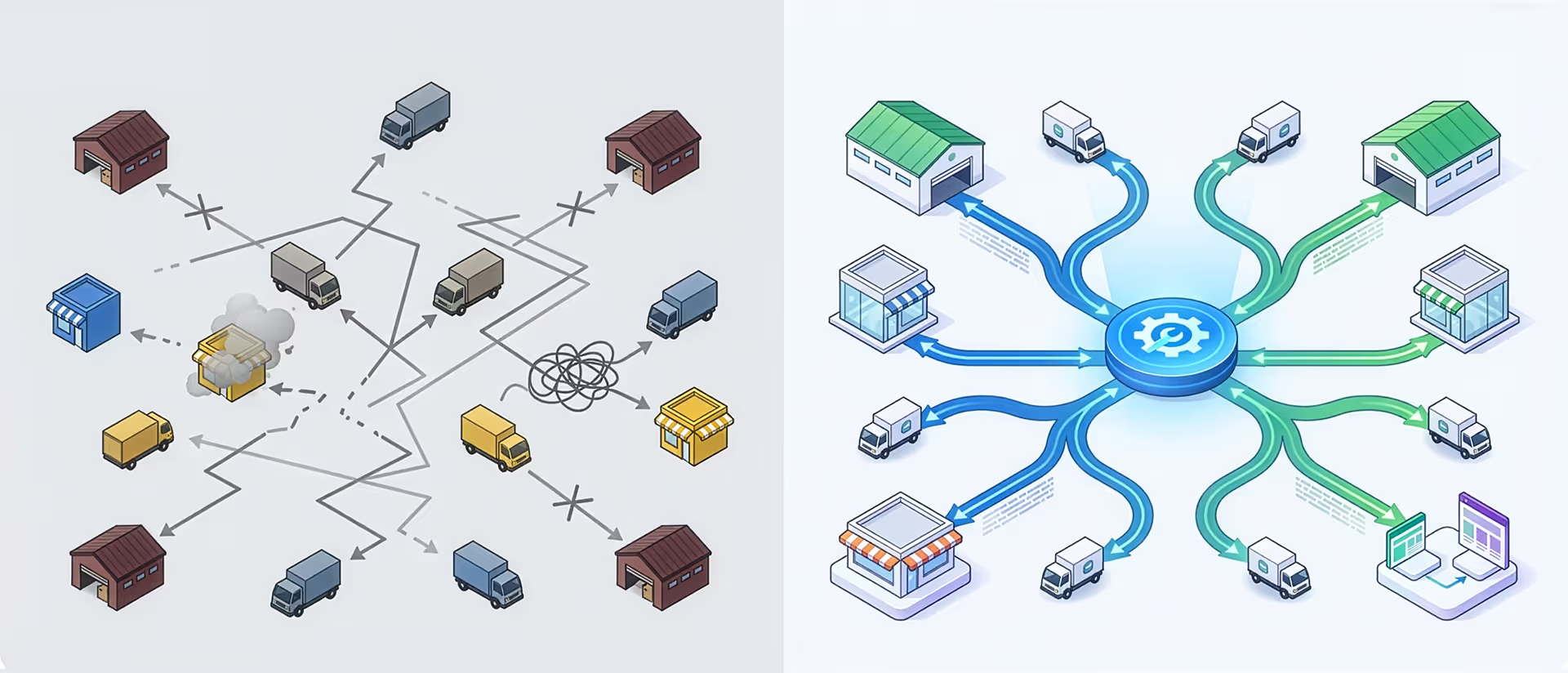
Returned and overstock goods are too often treated as liabilities, pushed into liquidation, returned to vendors, destroyed “in-field” or left idle in warehouses, rather than routed through intelligent, value-maximizing paths. It’s not that retail leaders don’t see the opportunity. It’s that they’re held back by fragmented systems, limited in-house expertise, and operational fatigue.
This post explores what retailers get wrong about recovery and why it hasn’t evolved alongside the rest of the retail stack, where current strategies fall short, and what a modern, automated approach to improving returns recovery really looks like.
The mindset has evolved, but the operations haven’t
Most retail executives today understand the upside of returns:
- Recovery of resale value
- Retention through easy returns
- Reputation gains through sustainability
- Inventory replenishment in omnichannel networks
Yet even with this awareness, the mechanics of returns management, especially recovery are still lagging. In many cases, returns are routed back through the forward supply chain or outsourced to third parties who aren’t incentivized to maximize recovery outcomes. This is not a strategic flaw; it’s a capacity problem. Retailers don’t lack belief in the value of their returns.They lack the tools and resources to extract that value at scale.
The Trap of Ineffective Recovery Strategies
Without strong systems or specialized teams, many retailers fall back on default options that seem convenient but cost them significantly over time:
1. The Liquidation Trap
Liquidation feels like a win, it clears space, minimizes handling, and returns some value. But it almost always leaves money (and brand equity) on the table:
- High-demand items are sold at cents on the dollar
- Recoverable goods are written off unnecessarily
- No customer engagement, no insights, no resale opportunity
- Lack of control over brand image impacts reputation
Liquidation is not a recovery strategy, it’s the final step, not the first.
2. Treating Overstock Like an Afterthought
Retailers often separate overstock from returns in terms of process, team, and tools. Both involve unsold inventory in need of new pathways to customers, markets, or partners. Overstock isn’t inherently undesirable; it’s often in front of the wrong market. For example:
- A retailer ships bathing suits from its northern stores to Florida stores in October, after peak season, where there is still demand.
- Winter jackets that didn’t sell in southern stores during the summer are moves to northern stores or outlet channels where demand is higher.
Overstock can and should be routed through the same intelligent recovery systems as returns, especially when it comes to:
- Recommerce strategies – like branded resale or outlet sites, e.g., selling last season’s electronics on certified online outlets
- Secondary market placement – such as selling lightly used or overstocked furniture through partner marketplaces
- Donation for tax credit or ESG value – for instance, routing unsold apparel to local charities at the end of the season
What Retailers Get Wrong About Recovery
Even with good intentions, retail leaders often fall into these flawed assumptions:
“Recovery = Restock”
Most returns aren’t just reshelved and resold. Smart recovery today involves:
- Inspection-based rules for resale, refurbish, or recycle
- Product-category logic to determine recommerce viability
- Disposition diversity, not default paths
“Returns Management Is a Logistics Issue”
It’s not just about reverse shipping. Returns recovery touches:
- Customer service
- Brand loyalty
- Sustainability metrics
- Profit margins
Leaving returns under warehouse ops or a generalist 3PL limits innovation and oversight.
“Decision EnginesTake Control Away”
Some retailers fear that using rules-based recovery automation means giving up strategic oversight. In reality, decision engines manage your logic at scale:
- You define the rules by product, condition, customer, and channel
- The engine ensures those rules are executed consistently
- Exceptions and escalations can still be reviewed by a human
Decision automation doesn’t take away control, it ensures execution doesn’t depend on human bias or outdated SOPs.
The Better Way: Recovery Paths that Deliver Value
Modern reverse logistics is built on diverse, intelligent recovery paths. Here’s what retailers should be implementing:
1. Return-to-Stock (RTS)
Still a strong path for fast-moving, low-defect items, especially apparel and consumer goods, when:
- The return is in resellable condition
- Processing and restocking costs are less than margin
- Demand still exists
2. Refurbish and Resell
High-value items (electronics, appliances, home goods) can be cleaned, repaired, and resold, sometimes through brand-owned channels or marketplaces like eBay, VIP Outlet, or Back Market.
3. Recommerce & Outlet Sales
Returned and overstock items sold through:
- Brand-owned or white-labeled recommerce sites
- Flash-sale partners
- Marketplace storefront
4. Donation & ESG-Aligned Recovery
Tax credits, carbon-offset reporting, and social-good branding can be realized through structured donation paths for non-resellable, but usable items.
5. Parts Harvesting & Recycling
Especially for electronics, furniture, and seasonal décor, parts harvesting reduces waste and supports circular economy efforts.
6. Customer “Keep it” Options (Returnless Refunds)
In low-cost, low-margin situations, offering a refund without requiring the item back can save on processing and shipping while boosting customer satisfaction.
Why Recovery Needs Rules, Not Reactions
Retailers often apply a single policy across all returns orrely on vendor partners to “figure it out.” But recovery is most effective when:
- Product category, value, and condition are factored in
- Customer value (LTV, return history, etc.) influences the approach
- Business priorities like ESG goals or clearance timing shape routingThis is where a modern, AI driven, recovery platform becomes essential. With a smart decision engine, retailers can:
- Set rules that reflect business logic, not operational defaults
- Route items to the most profitable or brand-aligned channel
- Report on what’s working and adjust continuously
The Hidden Cost of Doing Nothing
Failing to evolve returns recovery is expensive in ways that aren’t always obvious:
- Warehouse space wasted on unsorted, unrecovered returns
- Customer churn from slow or unclear refund processes
- Brand erosion when “sustainable” claims clash with landfill outcomes
- Missed revenue from secondary market resale or refurbishment
The biggest cost? Letting returns management stay stuck in 2015 while the rest of your retail stack moves forward.
What Retail Needs Now: Recovery-as-a-Function
Retailers don’t need to become recovery experts. But they do need a returns management partner (ReturnPro) that delivers:
- End-to-end visibility into returns and recovery performance
- Rule-based routing for returns, overstock, and beyond
- Marketplace and donation integrations for better recovery paths
- Speed and automation that frees up internal bandwidth
- Advanced analytics and AI, which help recommend optimal recovery paths and uncover value that might otherwise be missed
The importance of capturing maximum recovery cannot be overstated. Imagine a $100 jacket returned in like-new condition: in liquidation, you might recover $15; routed to a resale channel, you could recover $70. Recovering 70% instead of 15% can add hundreds of basis points to your bottom line. This illustrates how recovery is a strategic layer of retail that impacts profit, loyalty, and brand value; treating it that way, both operationally and culturally, is the next leap forward.
Final Word: Awareness Is Not the Same as Action
Retailers do understand that returns affect customer experience, operational costs, and brand reputation. Acknowledging that isn’t the same as having a strategy or the tools to capture value from it.
Most still lack the infrastructure, logic, and automation to turn returns into a competitive advantage. In the meantime, millions in resale value are lost every year to outdated processes, limited routing options, and default decisions like liquidation or return to vendor (RTV).
The good news? The technology exists. The rules are customizable. The recovery engine can be switched on without overhauling your entire stack. Retail doesn’t need more theories about why recovery matters.
It needs execution. Scale. Intelligence and a partner that handles recovery so the business can focus on growth.
Because the truth is: Returns aren’t going away.