Returns are no longer just a back-office nuisance. For enterprise and mid-sized retailers and brands, they are a frontline threat to profit margins, customer satisfaction, operational efficiency, and long-term brand value. With return rates exceeding 16%1 on average across retail categories and soaring as high as 30%1 for online apparel, the true cost of ignoring reverse logistics can mount fast if they are not managed correctly.
Retailers who fail to modernize how they manage returns are not just losing merchandise; they’re leaking margin, wasting inventory, damaging brand equity, and falling behind in sustainability commitments. Medium and enterprise retailers understand that returns are expensive, but few realize how much value is left on the table.
In this guide, we break down the hidden cost of returns and uncover the silent margin killers hiding inside outdated return systems. More importantly, we will show you how to fix it and how AI-powered ReCommerce can transform returns into one of your most profitable, sustainable growth engines.
The Silent Drain: How Returns Erode Margin
Returns can cost more than a refund. Each item sent back triggers a chain of costly expenses: shipping, inspection, restocking, repackaging, markdowns, and potential resale lose. According to CBRE, the average cost of a return is about $33 per item.
For enterprise and mid-sized retailers juggling large volumes, these costs add up quickly, millions lost annually in unnecessary operational drain. It doesn’t stop there:
- Returned merchandise processing delays pile up creating dead zones
- Returned inventory sits idle losing resale value
- Seasonal items miss resale windows leading to forced liquidation
- Operations slow down affecting overall fulfillment speed and capacity
- Returned merchandise processing delays pile up creating dead zones
- Returned inventory sits idle losing resale value
- Seasonal items miss resale windows leading to forced liquidation
- Operations slow down affecting overall fulfillment speed and capacity
Returns also introduce friction across departments: merchandising must re-forecast, operations get bogged down with inefficiencies, and finance struggles with write-offs. In most cases, these issues are compounded by outdated return policies and manual processing systems that weren’t designed for reverse flow at scale.
The longer it takes to route, sort, or resell a return, it eats into your margin. Without automation, the process becomes fragmented and inefficient.
Recovery Failure: When Returns Don’t Flow to ReCommerce
One of the biggest hidden losses? Missed resale value. Many retailers still default to liquidation or bulk wholesale when an item is returned, often recovering only 20–30% of the product's original value. Why? Because they lack automated rules-based recovery tools.
- Grade returns by condition with consistency
- Route inventory to the most profitable resale path
- List products across resale channels in real-time
Modern reverse logistics systems leverage recommerce marketplaces, B2B resale networks, and branded outlet channels to maximize recovery. When done right, recovery can reach 80-90% of an item’s value.
With the right infrastructure, retailers can make disposition decisions based on an items condition, margin threshold, brand integrity, and sales velocity. This precision helps maintain full control over pricing and resale channels, an absolute must for brands that value premium positioning.
Brand Damage from Poor Returns Flows
Returns that end up in unauthorized or unbranded resale channels don’t just lose value, they damage your brand. Customers may encounter your products on third-party marketplaces, misrepresented, discounted, or in poor condition.
This creates brand confusion: “Is this new? Why is it cheaper here?” It can also degrade price integrity and erode trust. As McKinsey2 notes, lack of control in secondary markets undermines brand equity and leads to long-term value dilution.
Retailers and brands spend millions building brand equity. If reverse logistics routes your returns to unauthorized discounters or sellers, that investment is undermined.
There’s also the ESG lens to consider. Consumers increasingly expect brands to have sustainable delivery and returns logistics in place. According to ReturnPro’s State of Consumer Returns Survey Report, 77% of consumers surveyed are willing to purchase from a brand that has sustainable practices in place and they look closely at how brands handle waste. When returned goods are incinerated or landfilled due to poor reverse logistics, sustainability claims lose credibility.
Branded, certified resale channels or ESG-compliant donations signal transparency and responsibility. They enhance brand perception and build loyalty, especially among environmentally conscious, values-driven shoppers.
Fixing the Problem: Automate, Recover, and Scale Returns Profitably
Returns are inevitable, but margin loss doesn’t have to be. Retailers must work on both sides of the equation: reduce returns upstream through better product data, fit guidance, sizing technology, and expectation-setting, while recovering more value downstream through intelligent reverse logistics.
For enterprise and mid-sized operations, this means integrating returns into core business processes, not treating them as an afterthought. The customer experience (CX), ecommerce, logistics, merchandising, and sustainability teams must work together.
Here’s how retailers are fixing the returns problem and turning it into a competitive edge:
Automate Returns Workflows
With AI-powered systems, retailers can:
- Instantly assess item condition via computer vision
- Automatically route returns to the best recovery path
- Apply margin-based logic to trigger the right disposition: resale, refurbish, recycle, or donate
AccelerateTime-to-Resale
Automation eliminates manual bottlenecks that delay resale. Returned items can be restocked, reconditioned, or resold in days not weeks boosting revenue recapture before value decays.
Improve Channel Recovery Rates
Returns management SaaS integrates directly with marketplaces, B2B channels, and branded outlets. Returns can be instantly relisted to the most profitable site, based on real-time demand and condition.
Reduce Operational Costs
Automation cuts labor costs, minimizes handling, and shortens processing time. This reduces logistics overhead and frees up warehouse capacity.
Drive Circular Retail at Scale
Smart returns technology ensures every item is logged, tracked, and recovered in a way that aligns with sustainability goals, whether through resale, donation, or recycling. Dashboards offer insight into landfill diversion, carbon savings, and ESG impact.
The ROI of Automation: What Retailers Stand to Gain
Even small improvements in returns efficiency can yield significant profit gains. According to Gartner and the Reverse Logistics Association3:
- Retailers who modernize returns can improve EBITDA by 3–5%
- Automating returns processing can cut per-item costs by up to 50%
- Improving resale recovery can generate 2–3x more value per unit
For example, a 10% reduction in preventable returns and a 30% lift in resale recovery could equal millions in reclaimed revenue annually.
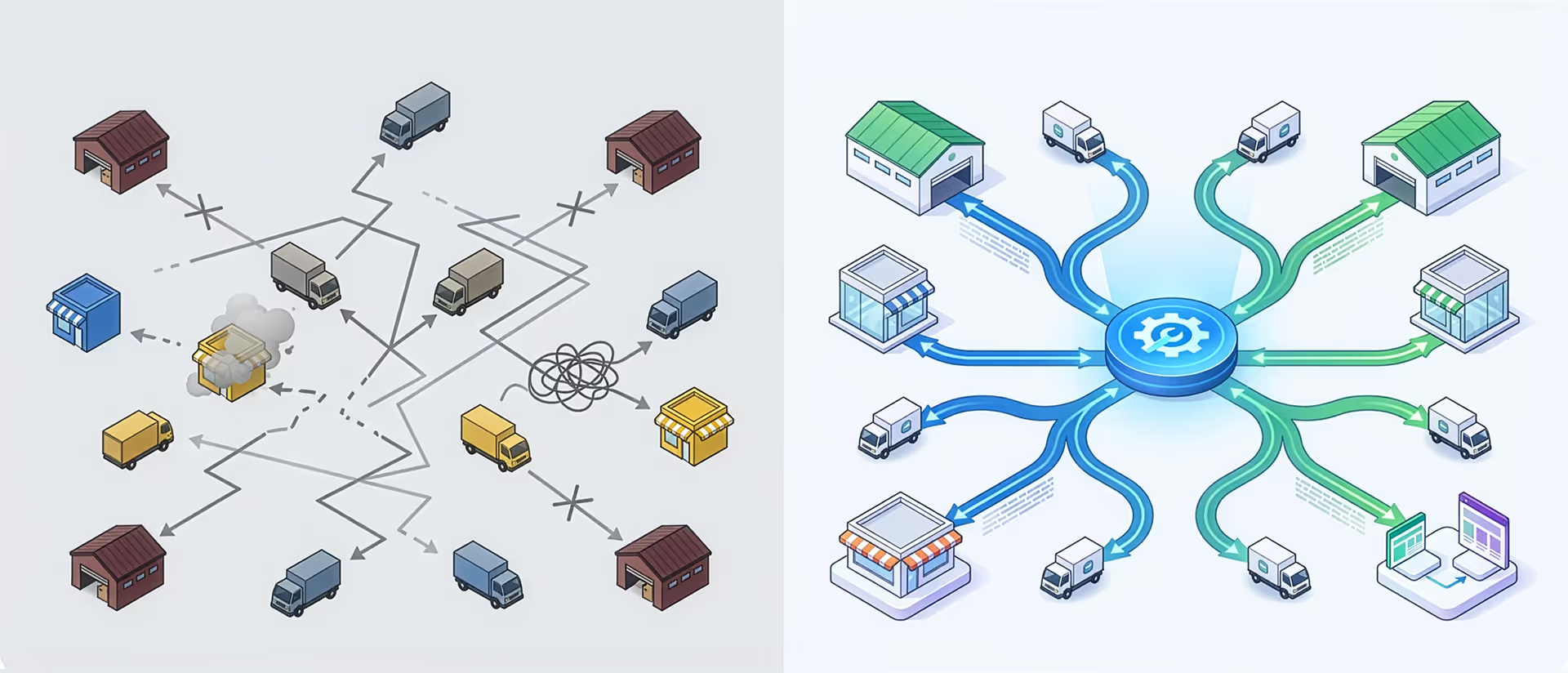
The Cost of Inaction vs. the Power of ReturnPro
Retailer A:
Treats returns reactively.They rely on outdated systems, manual processing, and default to liquidation policies. Their return operations are disconnected from ecommerce, CX, and supply chain. They lose 60%+ of potential value from returned inventory. Customers are frustrated by clunky return processes, and their ESG reporting lacks credibility.
Retailer B:
Uses ReturnPro to automate and optimize. They’ve built rule-based routing for maximum recovery through proprietary recommerce channels, 20+ marketplaces, and sustainability options that meet ESG goals. They recover up to 90% of value, reduce landfill rates by half, and leverage returns data to improve product quality and reduce return rates upstream.
The difference? One is leaking profit. The other is gaining competitive advantage.
Final Thoughts: Returns Are Not a Problem, They’re a Missed Opportunity
Returns aren’t just a logistics issue; they are a strategic lever. The real cost of ignoring them shows up in every corner of your business: customer loyalty, operational efficiency, brand perception, and ESG performance.
For retailers and brands, this is the moment to act. Consumers are demanding better experiences, stakeholders are demanding better margins, and the circular economy is becoming non-negotiable.
Are your returns operations working for you or against you?
ReturnPro has the forward-thinking, technology driven solutions that leading retailers rely on to recover more value, reduce return rates, and build resilient, sustainable return ecosystems.
Seeing is believing, schedule a strategy session today and find out how to turn your returns into revenue.
Sources:
[1] Appriss Retail (2023).https://apprissretail.com/resource/2023-retail-returns-report/
[2] McKinsey & Company, Secondhand Market Insights.https://www.mckinsey.com/industries/retail/our-insights/the-consumer-sector-in-2030
[3] Gartner & Reverse Logistics Association (2023).https://rla.org/reverse-logistics-stats

.avif)