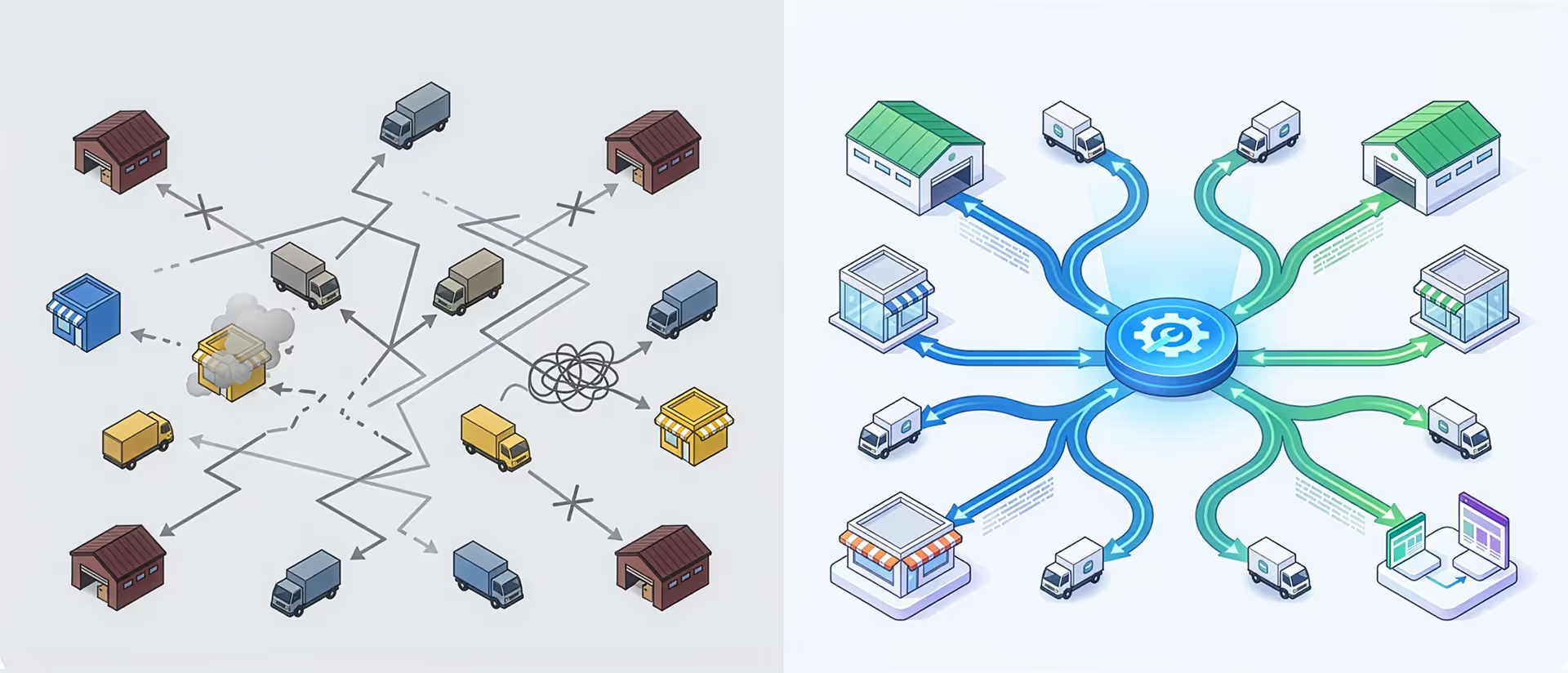
The retail industry has long mastered the art of forward logistics. But when it comes to getting products back via returns, recalls, or exchanges many retailers and product manufacturers are still flying blind. At the heart of this issue is a persistent and costly blind spot in vendor policies and agreements that fail to adequately address the financial and operational burden of reverse logistics.
While returns account for over $850 billion (NRF 2025 Retail Returns Landscape Report) in lost revenue across U.S. retail annually, a significant portion of that burden is not being shared equally between retailers and their product vendors. Most retailer-vendor agreements are designed to optimize sell-through, promotions, and performance at the point of sale. But what happens after the sale? In most cases, the systems, processes, and agreements simply don’t exist or align to ensure fair or consistent responsibility for returned products. And the fallout is costing vendors and retailers more than they realize.
Where the Blind Spots Are
The blind spots in vendor policies typically fall into three key areas:
1. Lack of Reverse Logistics Clauses in Vendor Agreements
Most vendor agreements outline terms for shipping, inventory replenishment, chargebacks, and markdowns. But they rarely address reverse logistics responsibilities in detail. Key questions go unanswered:
- Who pays for the cost of return shipping?
- Who handles restocking or recommerce preparation?
- What happens to unsellable inventory?
- What is the timeframe vendors are expected to support returned inventory before it is liquidated?
Without explicit guidance, retailers are often left holding the bag, absorbing the full cost of processing, restocking, warehousing, or disposing returned merchandise.
2. No Financial Penalties or Incentives for ReturnPerformance
Unlike chargebacks tied to late shipments or poor packaging, most vendor scorecards do not factor in return rates, defect rates, or customer satisfaction with the product post-purchase. A brand could have a high return rate due to poor quality or misleading product listings and face zero financial consequences. That lack of accountability creates an uneven playing field: brands that invest in quality and post-purchase satisfaction are treated the same as those who don’t.
3. Data Disconnected from Accountability
Retailers have detailed return data, reason codes, SKU-level volumes, time-to-return, but much of this data stays siloed within operations, not shared upstream with vendors. That’s a missed opportunity for collaborative problem-solving and cost-sharing.
Even worse, without transparency, brands are flying blind too. They don't know what products are being returned most, why, or what condition those products are in. This makes it impossible to adjust manufacturing specs, update packaging, or respond to customer dissatisfaction proactively.
Who Is Responsible?
The blind spot exists partly because of legacy practices, partly because of shifting channel dynamics, and partly because no one has been forced to take the lead.
Retailers
Retailers are the frontline operators when it comes to handling returns. They collect the items, interact with the customer, and absorb the processing costs. In many ways, they are the most incentivized to push for clearer vendor accountability, but legacy agreements, fragmented supply chains, and lack of standardization across product categories have slowed progress.
Retailers often absorb these costs silently to protect customer satisfaction and avoid friction with high-performing brands.
Brands and Product Manufacturers
Product vendors, especially those in categories like fashion, electronics, or home goods, are typically focused on sell-through metrics. Their incentives are aligned with pushing more products to shelves (or marketplaces), not what happens after a product leaves a customer's hands.
Yet, a vendor with a high return rate is directly contributing to margin erosion and operational complexity for their retail partners. Whether due to quality issues, misleading photos, inconsistent sizing, or inadequate packaging, many returns are preventable. But in the absence of structured feedback loops, brands often don’t feel the pressure to fix the problem.
Marketplace Operators
Marketplaces like Walmart, Amazon, and Target have introduced new vendor dynamics. In many cases, third-party sellers or brand-owned storefronts interact directly with customers and still leverage the marketplace’s returns infrastructure.
In this context, reverse logistics becomes even more fragmented, and the onus falls on the platform to create enforceable return policies, SLAs, and cost-recovery mechanisms. Some are making progress, but the overwhelming majority of marketplace sellers remain unprepared for managingr eturns efficiently, especially at scale.
How Are They Being Held Accountable?
The short answer? Not enough.
While some leading retailers have begun introducing return rate KPIs or operational chargebacks for excessive defects or high return volumes, these practices are far from universal. Most vendors are not being financially penalized for creating avoidable returns nor are they being rewarded for minimizing them.
However, a few emerging trends are pushing accountability forward:
1. Retailer-Vendor Return Scorecards
Innovative retailers are now creating “vendor scorecards”and incorporating return rate metrics into them. By sharing SKU-level return data and customer feedback, they empower brands to make changes and flag underperforming vendors with costly return rates. Some retailers are even tying return performance to future purchasing decisions or vendor tiering. If a brand consistently drives high returns, they may be de-prioritized for promotions, merchandising, or replenishment.
2. Return Reason Analytics and Root-Cause Feedback
Retailers working with partners like ReturnPro can now provide more detailed reason code analysis back to brands, including:
- Size/fit issues
- Damaged in transit
- Item not as described
- Missing parts or instructions
This data, when shared transparently, drives joint accountability. Brands can improve packaging, refine product descriptions, andt ighten quality control.
3. Collaborative Returns Cost-Sharing Models
Some larger retailers are piloting co-funded return processing models. These include:
- Charging back partial returns handling fees to vendors
- Offering incentives for brands that invest in sustainable, reusable packaging
- Sharing proceeds from ReCommerce of returned goods
These structures shift reverse logistics from a sunken cost to a shared responsibility, and they motivate vendors to think beyond just selling.
How Much Are Vendors Missing Out?
This blind spot isn’t just a liability; it’s a missed opportunity. Vendors who ignore reverse logistics are missing out in four keyways:
1. Revenue Recovery from Returned Inventory
Returned products don’t have to mean lost revenue. With a structured returns program, returned items can be inspected, refurbished, and resold via outlet, ReCommerce, or secondary channels. Brands partnering with returns tech providers like ReturnPro are recovering 20–40% more value from returned inventory than those who don’t.
This recovery directly benefits vendor margin and can offset upstream manufacturing costs or markdowns.
2. Product and Experience Improvement
Returns data is a goldmine for product R&D and customer experience teams. Vendors who access SKU-level insights can refine product design, packaging, and instructions, ultimately reducing return rates and improving customer satisfaction. According to unpublished ReturnPro client data, one brand used return reason analysis to overhaul their presale processes. The result? A 17% reduction in returns the following season and fewer negative reviews.
3. Retailer Relationship Optimization
Retailers are actively looking for vendor partners who take returns seriously. Vendors who show accountability and engage in shared-cost reverse logistics models gain favor with buyers and supply chain teams. This leads to stronger partnerships, more favorable shelf placement, and increased collaboration during peak seasons.
4. Sustainability and ESG Advantage
As sustainability becomes a boardroom priority, vendors can no longer ignore the environmental impact of their returns footprint. Excess returns contribute to landfill waste, carbon emissions from shipping, and resource depletion through unnecessary production cycles.
Brands that invest in reducing avoidable returns, improving recommerce rates, and implementing sustainable packaging gain a measurable ESG edge. (View ReturnPro’s 2024 Impact Report) This story resonates with retailers, investors, and consumers alike.
Closing the Gap: What Needs to Happen Now
To eliminate the blind spot in vendor policies around reverse logistics, a fundamental mindset shift is required. Returns can no longer be treated as a retailer-only problem or as an operational nuisance. They must be seen as a strategic function, one that deserves clarity, shared accountability, and investment from all stakeholders.
Here’s what vendors and retailers can do today:
Retailers:
- Audit current vendor agreements for reverse logistics clauses
- Integrate return metrics into vendor scorecards and performance reviews
- Share SKU-level return reason data with key vendors
- Explore co-funded or SLA-based returns handling frameworks
Vendors:
- Ask for return data and reason codes from your retail partners
- Use returns analytics to improve product quality and customer satisfaction
- Proactively include reverse logistics terms in future agreements
Retailers and vendors each face their own challenges but solving them in silos only perpetuates the blind spot. What’s needed is a shared solution that reduces costs for both sides and unlocks new value.
ReturnPro: Enabling Shared Value
ReturnPro bridges the gap by creating upside for both retailers and vendors. With retailer and manufacturer inventory already flowing through our warehouses, we reduce shipping costs, minimize touch points, and unlock new recommerce and resale channels. By connecting both sides of the value chain, ReturnPro redefines reverse logistics as a shared value-stream between retailers and vendors
Final Thought
The cost of returns isn’t just operational; it’s cultural influencing both consumer behavior and internal mindset. Retailers and product vendors alike need to treat reverse logistics as a critical piece of the customer experience and an opportunity for margin optimization.
At ReturnPro, we help our clients reframe reverse logistics from a profit drain into a performance catalyst. If your brand or retail network is ready to close the vendor policy blind spot and turn returns into revenue, let’s talk.