
Retail returns are one of the most consequential challenges facing the retail industry. The issue is no longer limited to rising return volume or the growing cost of eCommerce returns. A broader disconnect is reshaping the retail experience: consumers now expect sustainable and transparent retail returns practices, while retailers often struggle to deliver operational proof of those expectations across returns management and reverse logistics operations.
ReturnPro calls this the Sustainability Proof Gap.
The Sustainability Proof Gap reflects the disconnect between consumer expectations around sustainability, circularity, and transparency, and the visibility retailers provide to support those expectations. The gap is not driven by lack of operational activity alone. It is driven by the lack of customer-visible validation.
This visibility gap is beginning to influence how consumers evaluate:
- Return policies
- Sustainability claims
- Brand credibility
- Customer experience
- Purchase confidence
As returns volume continues to rise and omnichannel shopping behaviors evolve, returns are becoming one of the most visible indicators of customer trust and operational maturity in retail.
This is why many retail leaders are asking:
- How can retailers reduce returns without hurting the customer experience?
- How can reverse logistics operations support both cost reduction and customer trust?
- How can retailers improve transparency in retail returns?
- How can sustainability claims be supported with operational proof?
The 3 Layers of the Sustainability Proof Gap
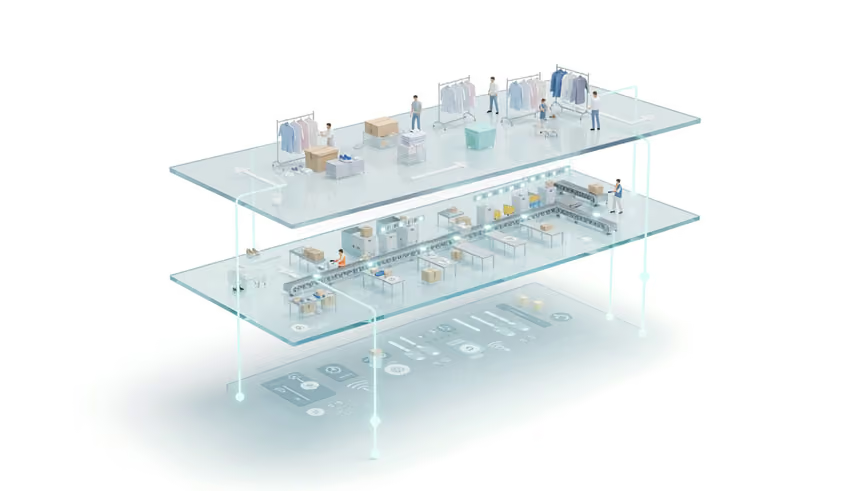
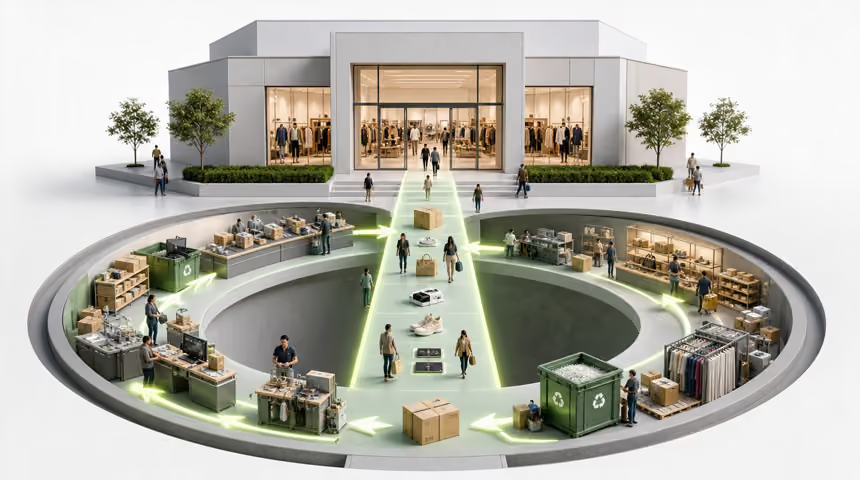
The Sustainability Proof Gap is not driven by a single operational issue. ReturnPro’s research suggests the gap exists across three connected layers that shape consumer perception and retailer credibility.
1. Consumer Expectations
Consumers expect retailers to operate within a more circular retail ecosystem where returned products are responsibly given a second life. Many shoppers already assume this is happening behind the scenes.
ReturnPro’s research found:
- 85% of consumers assume returned products get a second life
- 81% want retailers to disclose what happens to returned products
These expectations directly influence trust, purchasing confidence, and brand perception.
2. Operational Reality
Retailers often have reverse logistics workflows, sustainability initiatives, and recommerce programs already in place. However, operational complexity, cost pressure, fragmented systems, and inventory constraints can limit scalability and consistency.
Behind every return is a complex process involving:
- Transportation and routing
- Inspection and grading
- Inventory reintegration
- Repackaging and restocking
- Fraud detection
- ReCommerce decisioning
For many retailers, balancing operational efficiency, sustainability goals, and customer experience remains a major challenge.
3. Visibility and Proof
Even when sustainable returns processes exist, most consumers never see evidence of them.
ReturnPro’s research found:
- Only 55% of retailers say they provide disclosure into return outcomes
- Yet 77% of consumers report they have never seen that disclosure
This creates a widening expectation-versus-reality gap between what consumers believe should happen to returned products and what retailers visibly communicate throughout the customer experience.
As a result, sustainability claims can lose credibility even when operational efforts exist behind the scenes.
The Scale of Retail Returns Today (And Why It’s Growing)
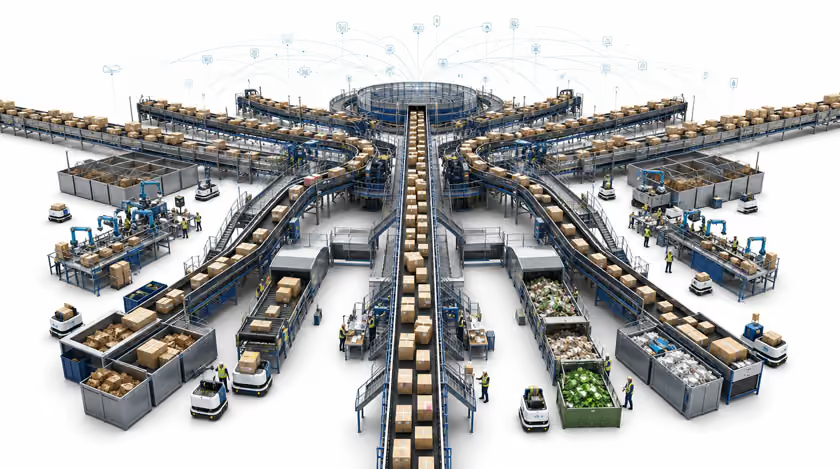
Retail returns have grown dramatically over the past decade, fueled by eCommerce growth and changing consumer purchasing behavior. In 2025 alone, U.S. consumers are projected to return nearly $850 billion worth of merchandise, representing approximately 17% of total retail sales. (NRF 2025)
eCommerce continues to accelerate this trend. Approximately 25% of online purchases are returned, with significantly higher return rates in categories such as apparel and footwear. In these categories, return rates regularly reach 20% to 40%, driven by sizing uncertainty, product expectations, and behaviors like bracketing. (Coresight Research, Claimlane Benchmarks)
The implication for retailers is clear: returns are a core part of the customer journey and must be actively optimized to reduce return rates and lower eCommerce return costs.
What Consumers Believe About Retail Returns
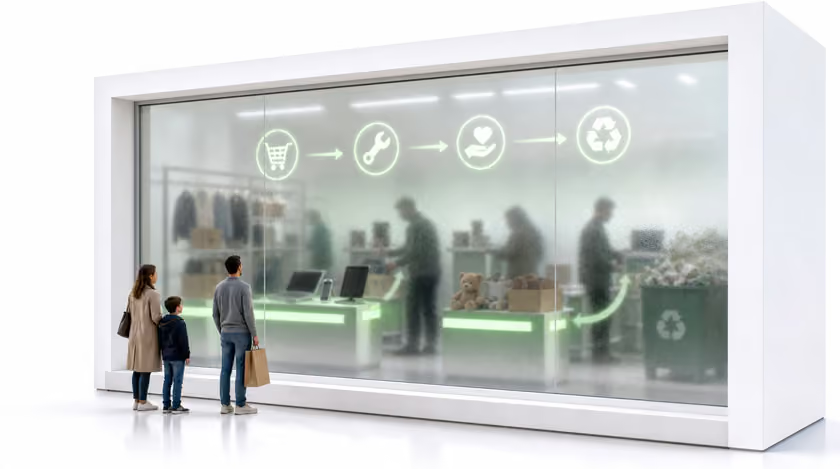
Consumers increasingly associate sustainability with accountability and visibility. Many now assume retail operates within a circular system where returned products are responsibly resold or recycled.
This expectation creates a powerful dynamic.
When consumers believe returns are handled responsibly:
- Purchase confidence increases
- Flexible buying behaviors become more acceptable
- Customers are more willing to try new brands
- Online conversion rates improve
However, consumer expectations and retailer visibility remain misaligned.
ReturnPro’s research found:
- Only 50% of returned products are resold or refurbished
- Only 55% of retailers say they provide disclosure into return outcomes
- Yet 77% of consumers report they have never seen that disclosure
This is where the Sustainability Proof Gap becomes visible.
Consumers assume returned products are being responsibly recovered, yet most retailers provide little visible proof of those outcomes across the customer experience.
Even when reverse logistics operations and recommerce programs exist behind the scenes, the lack of customer-facing transparency limits their ability to build trust and credibility.

Why Retail Returns Are Now a Customer Trust Issue
Retailers are asking an important question: how do retail returns impact customer trust, loyalty, and conversion rates?
The answer reflects a larger shift happening across the retail experience.
Returns were once treated primarily as a back-office operational function focused on cost control and efficiency. Today, the way retailers manage returns and execute reverse logistics directly shapes customer trust, brand perception, sustainability credibility, and long-term loyalty, influencing:
- Customer trust
- Brand perception
- Sustainability credibility
- Loyalty and retention
- Purchase confidence
- Revenue recovery
ReturnPro’s research found:
- 59% of consumers say trust increases with disclosure
- 86% believe retailers should be more honest about sustainability efforts
In practice, returns transparency is becoming both a conversion driver and a trust signal at the point of purchase.

The Business Cost of the Sustainability Proof Gap
Proof Gaps Become Revenue Gaps
The Sustainability Proof Gap is not just a transparency problem; it's a revenue problem. When consumers cannot verify what happens to returned products, trust erodes, and lost trust has a direct cost.
ReturnPro found that 51% of consumers actively avoid retailers whose values conflict with their own, while 46% have stopped shopping with a retailer because of values misalignment. These findings reveal a connection between values alignment and profitability. When consumers stop shopping with a retailer, the impact extends beyond a single transaction. Retailers lose a loyal customer and the long-term value that customer contributes over time.
For retailers processing millions of transactions, even small shifts in customer retention can create impactful financial consequences. Every lost purchase increases acquisition costs and reduces customer lifetime value. As competition intensifies and consumers become more values-driven, the ability to provide visible proof of sustainability efforts will become an important contributor to profitability.
Retailers that close the Sustainability Proof Gap strengthen trust, reinforce loyalty, and reduce the business costs associated with customer churn in an increasingly competitive marketplace.
The Growing Gap Between Consumer Expectations and Retail Reality
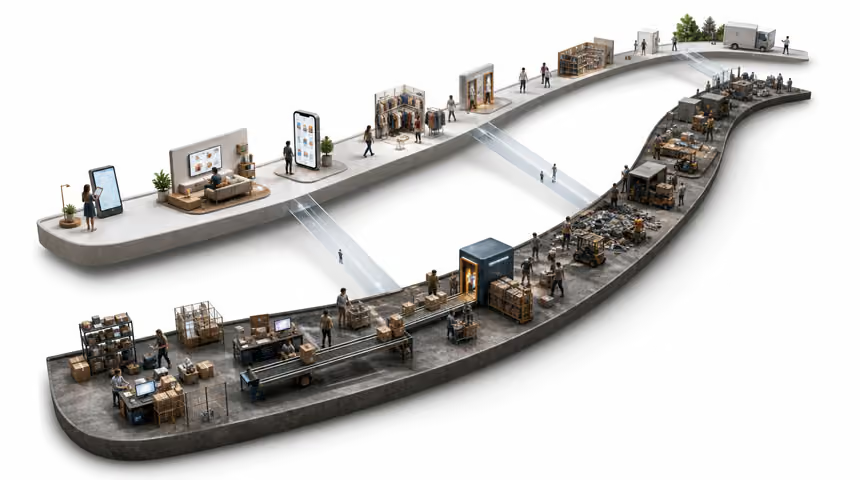
Consumer expectations are not static and the forces widening the Sustainability Proof Gap are accelerating.
Rising Consumer Expectations for the Returns Experience
Modern consumers expect returns experiences to be:
- Fast
- Flexible
- Frictionless
- Transparent
They also expect consistency across channels.
Omnichannel shopping behaviors have normalized buying online and returning in-store, while customers increasingly move between physical and digital touchpoints throughout the returns process.
At the same time:
- 86% of online-first shoppers want sustainability disclosure, yet only 22% have seen it
- 76% of store-first shoppers want sustainability disclosure, yet only 14% have seen it
The gap is no longer driven by awareness. It is driven by visibility.
Reverse Logistics Complexity and Operational Challenges
Behind every return is a highly complex reverse logistics workflow involving:
- Transportation and routing
- Inspection and grading
- Repackaging and restocking
- Inventory reintegration
- Fraud detection
- ReCommerce decisioning
These processes create operational strains, inventory delays, rising labor costs, and limited visibility when not effectively optimized.
ReturnPro’s retailer survey found:
- 66% of retailers say labor and processing costs are the biggest barrier to recommerce scale
- Less than 5% of revenue currently comes from recommerce programs
This creates a growing challenge for enterprise retailers trying to balance efficiency, sustainability goals, and customer expectations simultaneously.
Returns Fraud and Abuse
Returns fraud and abuse continue to increase pressure on retail operations and margins.
Common forms of abuse include:
- Wardrobing
- Receipt fraud
- Excessive bracketing
- Returning used or damaged items
At the same time, customer expectations around flexibility continue to evolve. Many shoppers now view behaviors like bracketing as a normal part of online shopping, particularly in high-return categories.
Retailers must balance fraud prevention with customer experience without introducing unnecessary friction that damages trust or loyalty.
Why Closing the Sustainability Proof Gap Matters
As retail competition intensifies, customer trust is becoming one of the industry’s most valuable assets. Returns are playing a central role in shaping that trust.
Consumers expect:
- Clear return policies
- Fast refunds
- Transparent return outcomes
- Visible sustainability efforts
- Consistent experiences across channels
When these expectations are met, returns can strengthen loyalty and increase repeat purchase behavior. When they are not, trust erodes quickly.
ReturnPro’s research found:
- 51% of consumers avoid retailers with conflicting values
- 46% have stopped shopping with a retailer because of conflicting values or positions
This illustrates how returns are one of retail’s most important and underutilized trust-building opportunities.
How Retailers Can Improve Returns Management and Reduce the Sustainability Proof Gap
Closing the Sustainability Proof Gap does not require retailers to completely rebuild operations. In many cases, the systems, workflows, and data already exist. The opportunity is to better operationalize, and expose what is already happening behind the scenes.
To do this, retailers can focus on five priorities:
1. Make Return Outcomes Visible
With 81% of consumers wanting to know what happens to returned products, retailers need to provide reassurance that products are being responsibly restocked, refurbished, resold, recycled, or given a second life. Visibility into these outcomes can be incorporated into returns portals, order communications, refund notifications, product pages, and sustainability reporting.
Making return outcomes visible creates opportunities to reinforce trust at a critical point in the customer journey. By connecting operational execution with customer-facing transparency, retailers can strengthen credibility while helping customers understand the impact of their purchasing and returns decisions.
Impact: Builds trust and strengthens sustainability credibility.
2. Use Returns Data to Improve Transparency
77% of consumers report never seeing information about what happens to returned products. This confirms that retailers must ensure their post-purchase claims are clearly communicated. Returns data provides retailers a way to provide transparent proof of outcomes. Retailers can share information about how products are recovered, how many items are resold, and how products are diverted from waste streams.
This approach benefits both customers and internal stakeholders. Returns data can support ESG initiatives, circularity reporting, operational decision-making, and customer communications simultaneously. Retailers can leverage returns data effectively to create stronger alignment between operational performance and customer expectations.
Impact: Turns operational data into visible proof that strengthens trust.
3. Expand ReCommerce and Open-Box Programs
ReturnPro's research found that 82% of consumers are open to purchasing and 61% have already purchased refurbished or open-box items. These findings reveal a significant opportunity to expand recommerce pathways for products that may not be suitable for sale as new.
The opportunity extends beyond financial recovery. Recommerce provides visible evidence that returned products are receiving a second life, helping retailers close the Sustainability Proof Gap while strengthening customer confidence. As consumer acceptance continues to grow, recommerce becomes both a revenue recovery strategy and a trust-building initiative.
Impact: Increases recovery value while providing visible proof of circularity.
4. Improve Omnichannel Returns Experiences
ReturnPro's research found that 86% of online-first shoppers and 76% of store-first shoppers want sustainability disclosure, yet only 22% and 14%, respectively, report seeing it. These findings highlight the need for more consistent visibility throughout the returns experience regardless of channel. When customers encounter different levels of transparency across digital and physical touchpoints, trust and satisfaction can suffer.
Prioritizing omnichannel returns creates more consistent experiences across eCommerce, stores, marketplaces, and customer service interactions. Unified returns portals, buy-online-return-in-store programs (BORIS), centralized visibility, and standardized communications improve the customer experience. Consistent omnichannel returns experiences create opportunities to strengthen loyalty and improve customer retention.
Impact: Strengthens loyalty and reduces experience-related churn.
5. Align Sustainability Messaging with Operational Proof
Support sustainability and ESG claims with visible evidence tied directly to returns outcomes and circularity performance. 86% of consumers believe retailers should be more honest about sustainability efforts and what happens to returned products. Retailers can strengthen credibility by connecting sustainability messaging directly to measurable operational outcomes.
The strongest sustainability narratives are grounded in operational reality. When retailers connect reverse logistics activities, returns management programs, and circularity initiatives to customer-facing communications, the messaging becomes easier to understand and trust. Aligning messaging with operational proof strengthens credibility and creates stronger alignment between what retailers say and what customers experience.
Impact: Strengthens sustainability credibility and customer confidence.
Frequently Asked Questions About Retail Returns and Sustainability Transparency
What is the Sustainability Proof Gap in retail?
The Sustainability Proof Gap is the disconnect between consumer expectations around sustainability and the visible proof retailers provide to support those expectations. ReturnPro's research found that 85% of consumers assume returned products receive a second life through resale, refurbishment, recycling, or other recovery pathways. At the same time, 81% want retailers to disclose what happens to returned products, yet 77% report never seeing that information. This creates a gap between what consumers expect and what retailers visibly communicate throughout the returns experience. The Sustainability Proof Gap highlights the growing need for retailers to connect operational execution with customer-facing transparency.
What happens to returned products?
Returned products are typically restocked and sold as new, refurbished and resold, liquidated to secondary markets, recycled, donated, returned to vendors, or discarded. The outcome depends on the product's condition, recovery value, brand requirements, and processing costs. Products that can be quickly returned to inventory generally have the highest recovery value. Items that cannot be economically recovered may be routed to alternative recovery channels or disposal. Formal recommerce programs better position retailers to recover value from returned inventory and provide visible proof of circularity.
What is recommerce in retail?
Recommerce in retail is the process of reselling, refurbishing, or redistributing returned or pre-owned products through secondary market channels rather than discarding or liquidating them at minimal value. ReturnPro's research found that 82% of consumers are open to purchasing refurbished or open-box items and 61% have already done so, signaling strong and growing market acceptance. For retailers, recommerce creates a dual opportunity, recovering revenue from returned inventory while providing visible proof that products are receiving a second life. Despite this, less than 5% of retailer revenue currently comes from recommerce programs, reflecting the operational barriers many retailers still face in scaling these pathways.
Are returned products thrown away?
Yes, some returned products are thrown away, but disposal is usually a last resort. Products may be discarded when the cost of inspection, transportation, repackaging, or resale exceeds their recovery value. Certain products also face safety, contamination, regulatory, or brand protection restrictions that limit resale opportunities. Industry research estimates that approximately 9.5 billion pounds of returned merchandise enter landfills each year in the United States. Many retailers are investing in recommerce, refurbishment, donation, and recycling programs to reduce waste and improve recovery rates.
Why do retailers destroy returned inventory?
Retailers may destroy returned inventory when products cannot be safely resold or efficiently reintegrated into inventory. Common reasons include contamination concerns, product damage, regulatory requirements, vendor restrictions, fraud risk, and the cost of processing low-value items. Industry studies have found that processing a returned item can cost retailers between 20% and 65% of the product's original value, making recovery economically challenging. The challenge in deciding which products to discard and which to keep is balancing operational efficiency, profitability, and sustainability goals.
Why does returns transparency maqtter to consumers?
Returns transparency helps consumers understand what happens to products after they are returned and whether retailer actions align with sustainability claims. ReturnPro's research found that 59% of consumers say transparency around return outcomes increases trust. Visibility into resale, refurbishment, recycling, and recovery programs helps customers evaluate a retailer's commitments more confidently. Transparency also improves confidence in the overall returns experience and strengthens brand credibility. As sustainability expectations continue to grow, consumers increasingly expect retailers to provide clear information about return outcomes.
How do retail returns impact customer trust and loyalty?
Retail returns impact customer trust and loyalty by shaping how customers evaluate a retailer's reliability, transparency, and overall post-purchase experience. Fast refunds, clear policies, transparent communication, and convenient return options help build confidence and encourage repeat purchases. ReturnPro's research found that 46% of consumers have stopped shopping with a retailer because of values misalignment, while 51% actively avoid retailers whose values conflict with their own. Poor returns experiences can damage trust and increase customer churn. Positive returns experiences can strengthen loyalty and improve long-term customer retention.
How do retail returns impact profitability?
Retail returns impact profitability by increasing transportation, labor, processing, and inventory management costs while reducing the value recovered from returned merchandise. Returns can also create additional costs through markdowns, liquidation, disposal, and fraud losses. NRF estimates that consumers will return approximately $850 billion in merchandise annually, representing about 17% of total retail sales. (NRF 2025) Delays in processing returned inventory can further reduce profitability by limiting resale opportunities and increasing inventory holding costs.
What are the biggest challenges in reverse logistics?
The biggest challenges in reverse logistics include transportation costs, labor-intensive processing, inventory visibility, fraud prevention, disposition decisions, and recovery optimization. Unlike forward supply chains, returned products require inspection, grading, routing, and recovery decisions before they can be resold or otherwise dispositioned. ReturnPro's retailer research found that 66% of retailers identify labor and processing costs as significant barriers to scaling recovery and recommerce programs. Delays in processing can reduce product value and increase operational expenses. Improving visibility and automation remains a priority for many retailers.
How do retailers manage eCommerce returns?
Retailers manage eCommerce returns through returns management software, reverse logistics workflows, customer service processes, and recovery networks. With approximately 25% of online purchases being returned and rates reaching 20% to 40% in high-return categories, these systems are critical to processing volume efficiently. They coordinate return authorizations, shipping, inspections, refunds, exchanges, return-to-vendor (RTV) activities, and disposition decisions. Returned products may then follow different disposition pathways depending on product condition, brand policies, and recovery value. Automation helps improve processing speed and reduce manual effort.
What is the most efficient way to manage retail returns?
The most efficient way to manage retail returns is through a combination of workflow automation, centralized visibility, data-driven decision-making, and optimized recovery pathways. Returns management software helps retailers automate routing, disposition, refund processing, and inventory updates. Centralized visibility improves inventory accuracy and reduces processing delays. Analytics and automation can help identify opportunities to improve recovery value and reduce operational costs. Together, these capabilities improve efficiency and scalability across returns operations.
How can retailers reduce eCommerce returns without hurting customer experience?
Retailers can reduce eCommerce returns without hurting customer experience by improving product information, sizing guidance, customer reviews, imagery, and order visibility. Research from Coresight shows that sizing and fit issues remain one of the leading causes of apparel returns. Providing more accurate product information helps customers make better purchasing decisions and reduces avoidable returns. At the same time, maintaining convenient return options preserves purchasing confidence and reducing buyer remorse. The most effective strategies focus on preventing avoidable returns rather than adding friction to the returns process.
How can retailers improve transparency in returns?
Retailers can improve transparency in returns by providing visibility into refund status, return outcomes, recovery pathways, and product disposition processes. Product pages, returns portals, order communications, refund notifications, and sustainability reporting all create opportunities to share information. ReturnPro's research found that 81% of consumers want retailers to disclose what happens to returned products. Providing this visibility helps customers better understand return outcomes and retailer commitments. Transparency can also improve confidence in the overall returns experience.
How is AI changing retail returns management?
AI is changing retail returns management by helping retailers automate decisions, improve fraud detection, optimize routing, and identify patterns that drive returns. Machine learning models can analyze historical returns data to predict return risk and recommend disposition pathways. AI also helps improve inventory visibility and accelerate operational workflows across the reverse supply chain. Gartner research shows that AI-enabled supply chain technologies can significantly improve decision-making speed and operational efficiency (gartner, 2024).
How can retailers reduce returns fraud without hurting customer experience?
Retailers can reduce returns fraud without hurting customer experience by applying stricter controls to higher risk returns instead of creating friction for every customer. Risk scoring, customer return history, purchase verification, receipt validation, and AI-powered fraud detection can help identify suspicious behavior. According to the National Retail Federation, retailers lose tens of billions of dollars annually to return fraud and abuse. A targeted approach helps retailers reduce fraud exposure without hurting customer experience.
Closing the Gap Starts with Visibility
The Sustainability Proof Gap is already reshaping customer trust, loyalty, and purchasing behavior across retail. Consumers now expect more transparency, more circularity, and more visible proof than most retailers currently provide.
Closing that gap does not require entirely new infrastructure. It requires:
- Better visibility
- Stronger communication
- More effective use of existing operational data
- Greater alignment between sustainability execution and customer experience
Retailers that operationalize returns transparency effectively will gain more than operational efficiency. They will gain a measurable trust advantage in a retail environment where consumers increasingly evaluate brands by what happens after the purchase.
Download The Consumer Sustainability Proof Gap Retailers Can’t Ignore to explore the data behind consumer expectations, retailer execution, and the growing disconnect shaping trust, loyalty, sustainability, and returns performance.
Sources

